
Are you dreaming of that perfect pizza crust? What if the secret lies in how you knead your dough?
The best method depends on your priorities: Hand-kneading offers better gluten development and tactile feedback, while machines provide consistency and reduce labor. For top-quality pizza dough, understanding the science behind each technique is key.
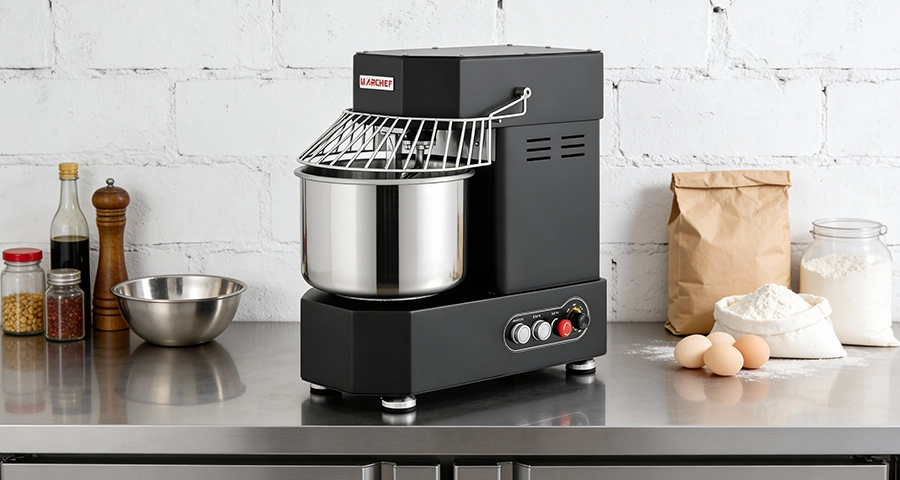
So, which method should you choose? Let’s find out.
The Fundamentals of Pizza Dough Science
Are you wondering what makes good pizza dough? It all comes down to gluten development.
Gluten, formed when flour meets water, gives pizza dough its elasticity and strength. Kneading aligns gluten strands, creating a network that traps gases and provides structure. The right kneading technique is essential for a crust that is both tender and chewy. I’ve always found that understanding this process helps me achieve better results in my own kitchen.
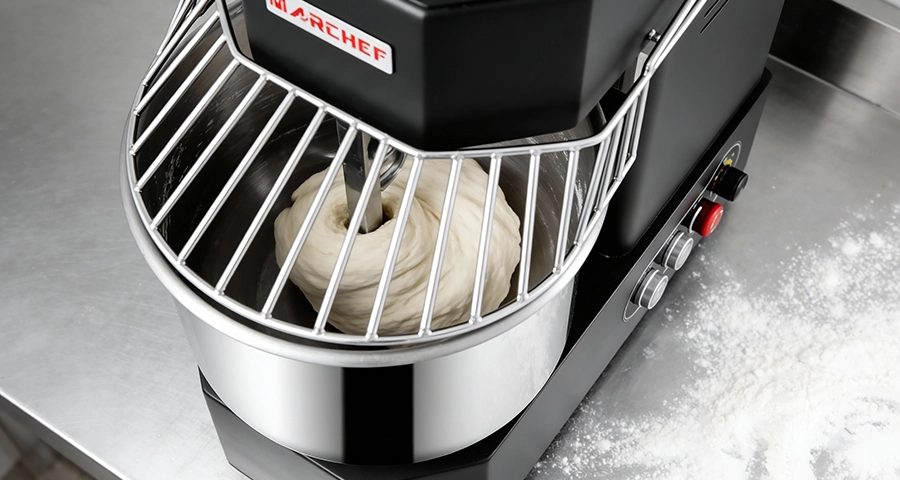
Gluten development is a critical aspect that directly influences the quality of your pizza crust. As the dough is mixed and kneaded, gluten proteins align and form a network, imparting elasticity and the chewiness characteristic of a perfect pizza crust. This network retains gases released during fermentation, allowing the dough to rise and develop its airy texture. The more mechanical action the dough is subjected to, the more gluten bonds are formed. One of the reasons for this is that as you work the dough, you are exposing more of the flour to the water to activate gluten bonds. You are also moving the gluten proteins around in relation to each other so that they bond with many other protein molecules. This massive lattice of gluten bonds is what gives bread structure and a chewy consistency. I think mastering gluten is the key to good pizza.
Therefore, the method you choose affects the gluten and final quality of your pizza.
Hand-Tossed Techniques: The Artisan Advantage
Want to feel like a true pizzaiolo? Do hand-kneading, but is it really an advantage?
Hand-kneading allows for a slower, more controlled manipulation of the dough, which enhances gluten structure. You can also get immediate tactile feedback to adjust hydration or kneading intensity. Hand kneading also connects you directly with your product, allowing you to feel the dough’s development through every stage of the process.
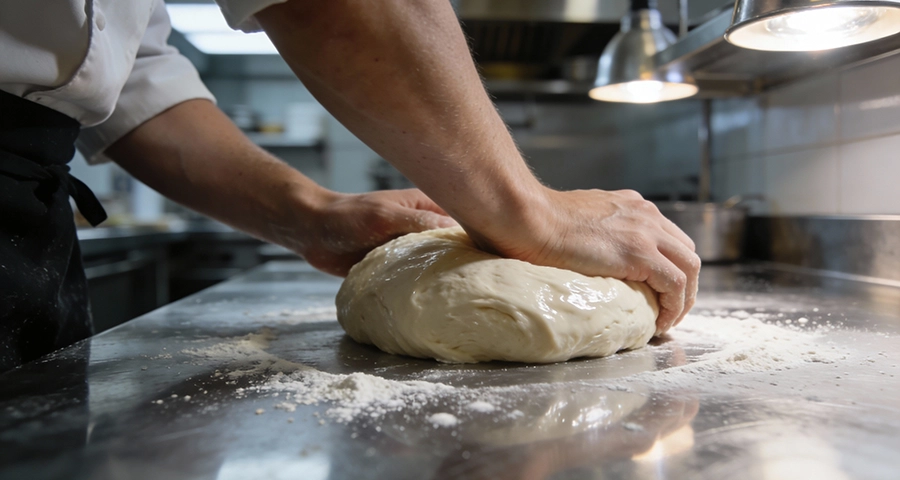
Hand kneading is ideal for smaller batches, typically anything under 1 kg of flour. It’s an excellent choice if you don’t bake very often. Hand kneading is a great choice if you like having complete control over the dough and find it relaxing. Hand kneading is a good choice for dry dough because it’s straightforward and doesn’t require a machine. Also, it is nearly impossible to over-knead with your hands. I have personally found that hand kneading is great for high-hydration doughs (above 70%). With hand kneading, traditional methods are preferred for high-hydration doughs because they allow for the gentler dough manipulation. It typically takes around 15/20 minutes, and for larger batches it can take up to 20/30 minutes.
But, it does take effort and time, I often find myself thinking, “Is this worth it?”.
Machine-Pressed Dough: Engineering Consistency
Need to save time and ensure uniformity? Is machine kneading for you?
Machines, like stand mixers, ensure consistent dough texture by maintaining uniform kneading speed and pressure. Stand mixers reduce labor time by 50–70% compared to manual kneading. Precise temperature control is easier with machines using chilled bowls or attachments. This is especially useful in warmer environments.
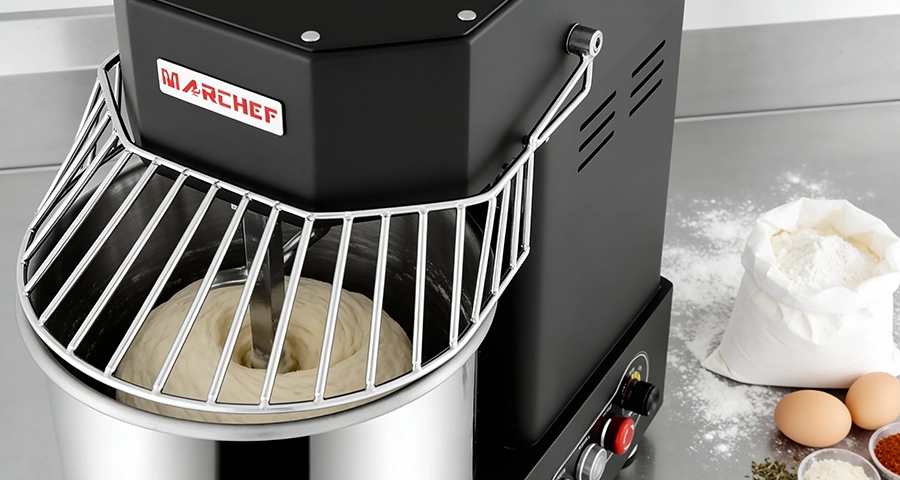
Machine kneading is the preferred method for handling larger quantities of dough. It does the work for you, so you don’t have to spend as much time and effort doing it by hand. Machine mixing is perfect for recipes that call for extensive kneading, particularly those involving high hydration levels. High-hydration dough benefits from a fast mix to develop its strength. Modern pizza making combines traditional wisdom with contemporary understanding of gluten development. Professional techniques like autolyse, folding, and controlled mixing speeds can enhance gluten development while preserving dough quality.
But beware, over-kneading is more common with machines, risking dense or tough dough. It’s also possible to overknead the dough. Remember, the machine creates friction.
MARCHEF’s Professional Solutions
Looking for equipment that helps you make the best pizza? Then try MARCHEF.
As a B2B provider of top-quality western kitchen equipment, MARCHEF offers a range of solutions perfect for making pizza. Our products, crafted in our two factories in China, are designed to meet the demands of large company buyers and foreign distributors. Our stand mixers ensure consistent dough every time, reducing labor and improving efficiency. I always recommend our products because they offer the best quality at affordable prices with a stable supply chain.
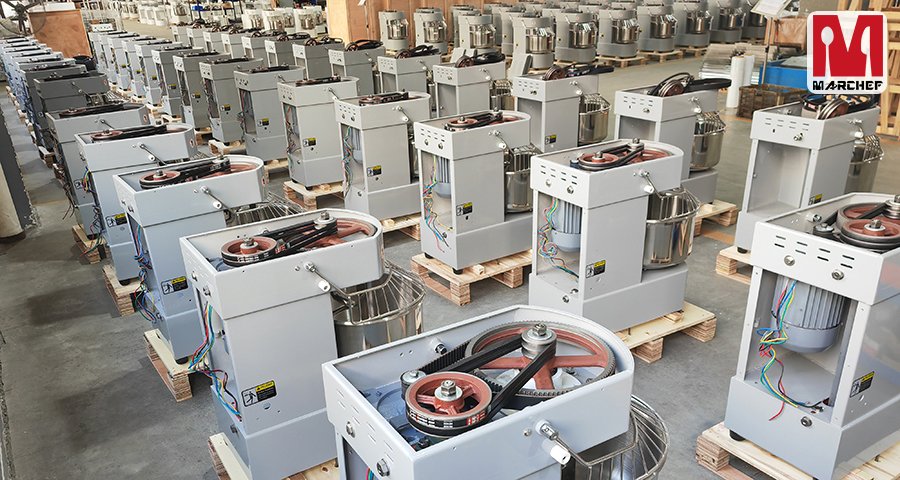
Our factory is located in Panyu District, Guangzhou City. Our main products include deep fryers, griddles, warming pans, waffle makers, panini ovens and other cooking equipment and fast food equipment. I understand the challenges you face, such as the lack of communication with suppliers that often results in delayed delivery. That’s why MARCHEF prioritizes clear communication, quality control, and reliable logistics. Our main export areas are Europe, the Middle East, and Southeast Asia.
Ultimately, the best method depends on your needs.
Conclusion
Whether you choose the artisan touch of hand-kneading or the consistent efficiency of a machine, understanding the science ensures a perfect pizza crust every time.