
It is so annoying when your microwave breaks. Are you wondering if you should buy a commercial microwave instead of a household one?
Commercial and household microwaves differ in power, durability, and features. Commercial microwaves have higher power for faster cooking, are built for heavy use, and often include programmable settings. Household microwaves are designed for lighter use and typically have simpler controls.
So, you might be wondering if a commercial microwave is right for you. Now, let’s dive into the specifics to help you decide.
What is the Difference Between Commercial and Residential Ovens?
It’s frustrating when your microwave can’t keep up. What exactly makes a commercial microwave different from the one in your kitchen at home?
Commercial microwaves are designed for high-volume, continuous use in restaurants and other food service establishments. They have higher power outputs, durable construction, and features like programmable controls. Residential microwaves are intended for lighter, less frequent use in homes.
Commercial microwaves are built to withstand the demands of a busy kitchen. I remember visiting a local restaurant supply store and being amazed by the sheer size and sturdiness of the commercial microwaves. Here’s a breakdown of the key differences:
| Feature | Commercial Microwave | Residential Microwave |
|---|---|---|
| Power Output | 1000-3000 watts | 600-1200 watts |
| Usage | Heavy, continuous | Light, infrequent |
| Construction | Stainless steel, durable components | Plastic, less durable components |
| Controls | Programmable, multiple power levels | Basic, limited options |
| Turntable | Often absent, uses a stirrer system | Typically present |
| Cleaning | Easy to clean, flat ceramic base | More difficult, turntable and crevices |
| Lifespan | 8-10 years | 7-10 years |
The higher power output means food cooks much faster. The durable construction ensures the microwave can handle constant use without overheating. I’ve seen restaurants using the same commercial microwave for years without any issues. The programmable controls also ensure consistent results, which is crucial in a commercial setting.
What Makes a Microwave Commercial Grade?
Ever wonder what “commercial grade” really means? What features set these microwaves apart from regular ones?
A microwave is considered commercial grade due to its high power output, typically ranging from 1000 to 3000 watts, and its durable construction designed for heavy, continuous use. Commercial microwaves also feature programmable controls, stainless steel interiors and exteriors, and the absence of a turntable.
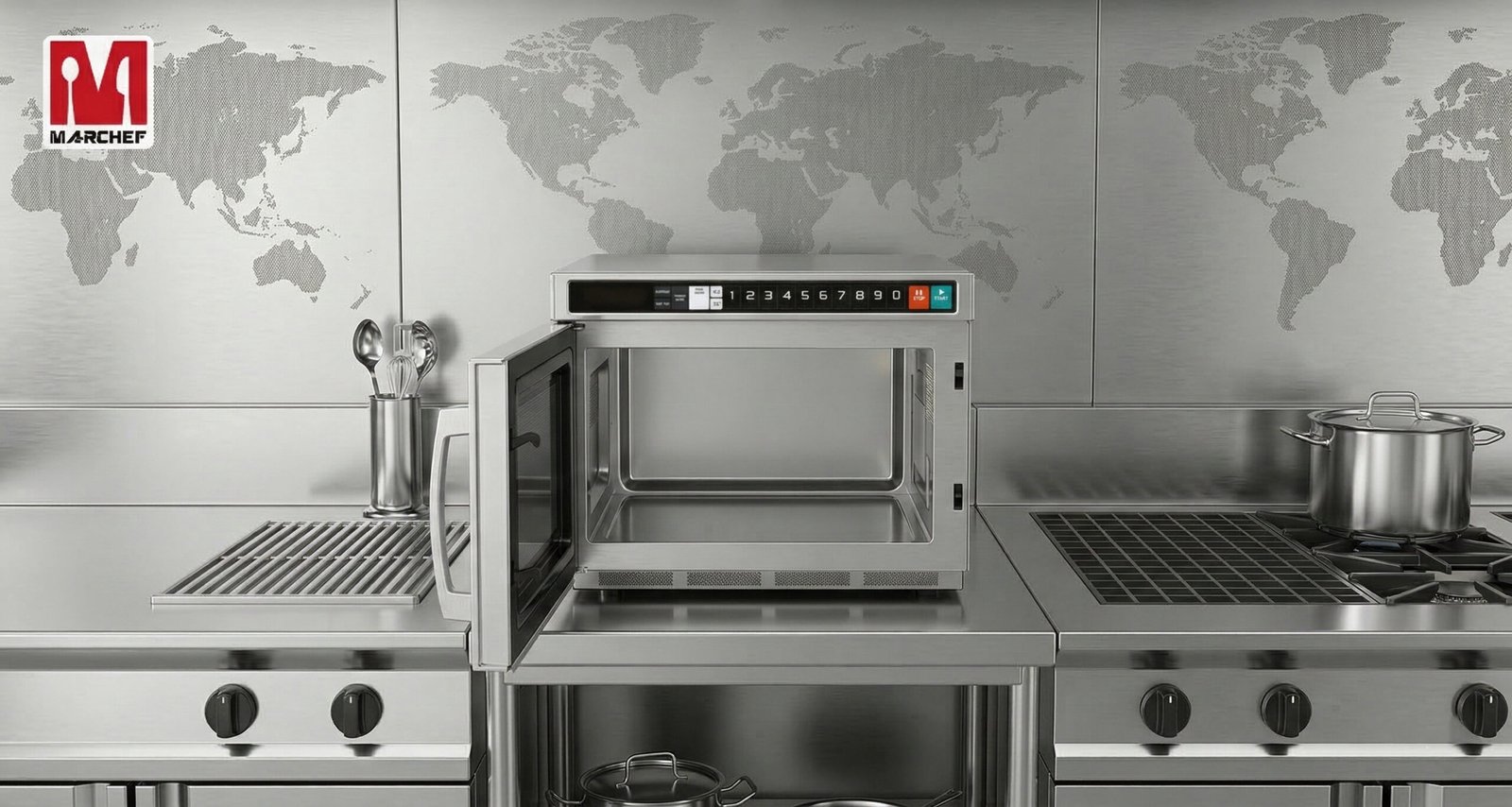
Commercial grade microwaves are not just about power; it’s about reliability and efficiency. I once spoke with a chef who told me that his commercial microwave was the most important appliance in his kitchen, besides the range. Here’s a closer look at what makes them special:
- Higher Power Output: Commercial microwaves heat food much faster, which is essential in a busy kitchen.
- Durable Construction: They are built to withstand constant use, often with stainless steel interiors and exteriors that are easy to clean and sanitize.
- No Turntable: Instead of a turntable, commercial microwaves use a stirrer system to distribute heat evenly, accommodating larger dishes.
- Programmable Controls: These allow for pre-setting cooking times and power levels for different menu items, ensuring consistent results.
- Commercial Insurance and Health Compliance: Designed to meet specific standards for commercial use.
These features contribute to a microwave that can handle the demands of a commercial environment.
Do Commercial Microwaves Last Longer?
Thinking about the long run? Do commercial microwaves really hold up better than household ones?
Commercial microwaves are generally built with more robust components and designed to withstand constant operation, leading to a longer lifespan compared to household microwaves. With proper maintenance, a commercial microwave can last around 8-10 years, while a household microwave typically lasts 7-10 years.
The longevity of a microwave depends on several factors, including build quality, frequency of use, and maintenance. I read an article recently that said commercial microwaves often have components that are designed to be repaired rather than replaced, which can extend their lifespan. Here’s a comparison:
| Factor | Commercial Microwave | Household Microwave |
|---|---|---|
| Components | Heavy-duty, designed for constant use | Lighter-duty, designed for less frequent use |
| Maintenance | Easier to clean and repair | More difficult to repair |
| Usage | High-volume, continuous | Low-volume, intermittent |
| Lifespan | 8-10 years | 7-10 years |
Commercial microwaves are often made with stainless steel, which is more durable and easier to clean than the plastic components found in many household microwaves. This makes them better suited to withstand the rigors of a commercial kitchen.
Can I Use a Commercial Oven at Home?
Curious about bringing professional equipment into your home? Is it practical to use a commercial microwave in a residential setting?
Yes, you can use a commercial microwave at home, but it might be overkill. Commercial microwaves are larger, more powerful, and more expensive than household models. While they offer faster cooking times and greater durability, they may not be necessary for typical home use.
While it’s technically possible to use a commercial microwave at home, there are several factors to consider. I helped a friend renovate his kitchen, and he was tempted to install a commercial microwave. Here’s what we discussed:
- Size: Commercial microwaves are often larger and may take up more counter space.
- Power Consumption: They use more energy, which could increase your electricity bill.
- Cost: Commercial microwaves are significantly more expensive than household models.
- Features: You might not need all the advanced features, like programmable controls, for home use.
Unless you have a very large family, cook frequently, or need the extra power and durability, a household microwave is likely sufficient.
What Are the Best Microwave for Commercial Use?
Need a microwave for your business? What are the top choices for commercial microwaves?
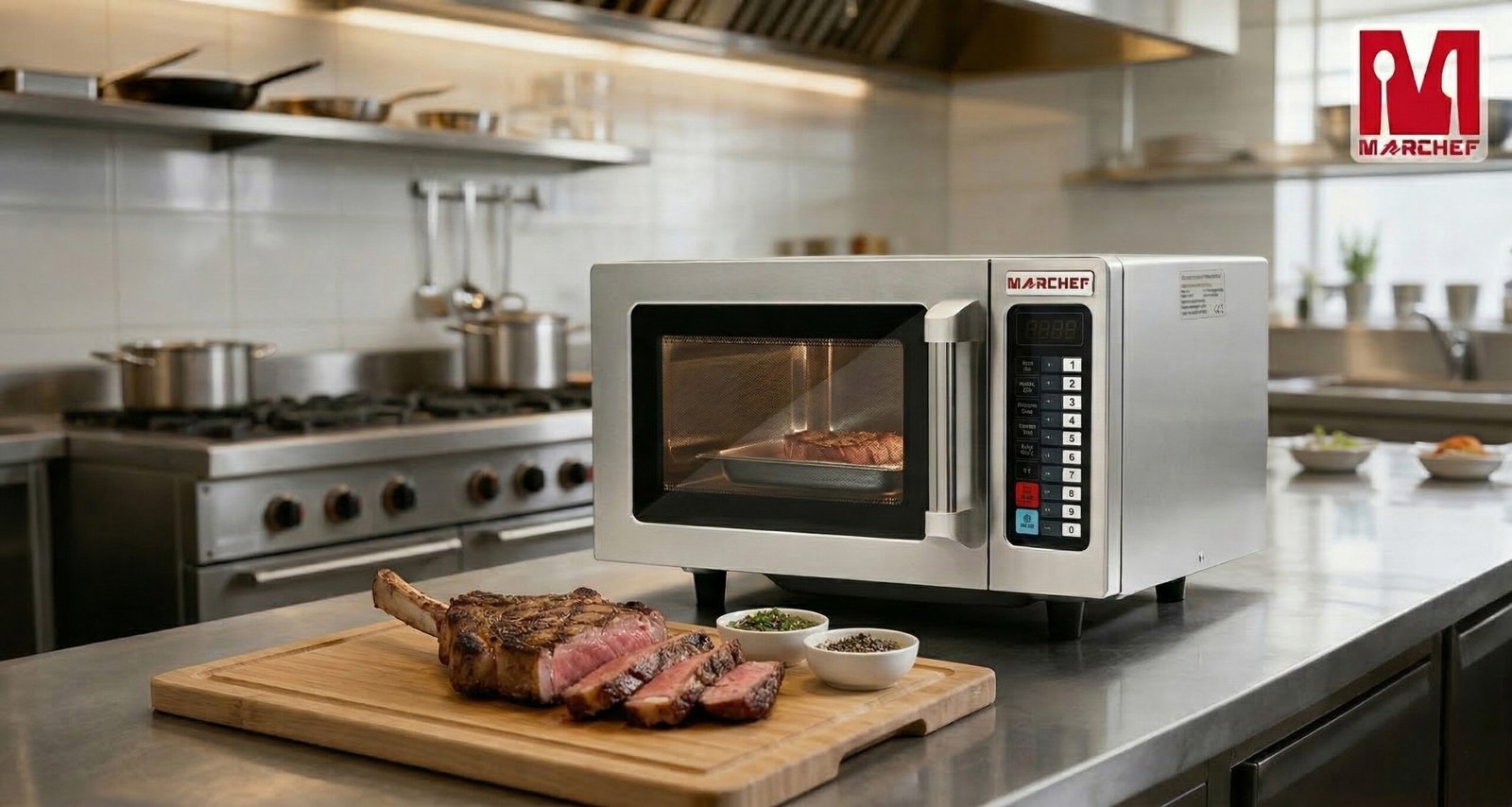
**The best microwaves for commercial use are those that offer high power, durability, and programmable features.The popular MOA34GTQ-S00E model has garnered acclaim from customers for its reliability and exceptional performance in commercial kitchens.
Choosing the right commercial microwave depends on your specific needs and budget. and here are some key factors to consider:
- Power Output: Higher wattage means faster cooking times.
- Size and Capacity: Choose a size that fits your kitchen space and can accommodate your typical dish sizes.
- Durability: Look for stainless steel construction and robust components.
- Features: Programmable controls, multiple power levels, and easy-to-clean interiors are important.
Conclusion
Commercial microwaves are built for heavy use and offer more power and features. Household microwaves are designed for lighter, less frequent use. Consider your needs before choosing.