
Broken waffle makers kill morning sales and frustrate line cooks. Spare units sit in storage and tie up cash. You can stop this waste with modular procurement.
Smart commercial waffle maker procurement cuts downtime and inventory by adopting modular designs. Kitchen operators replace individual heating plates in two minutes instead of shipping whole machines. This strategy reduces backup inventory to two spare plates per store, eliminates technician visits, and cuts five-year operating expenses by over half.
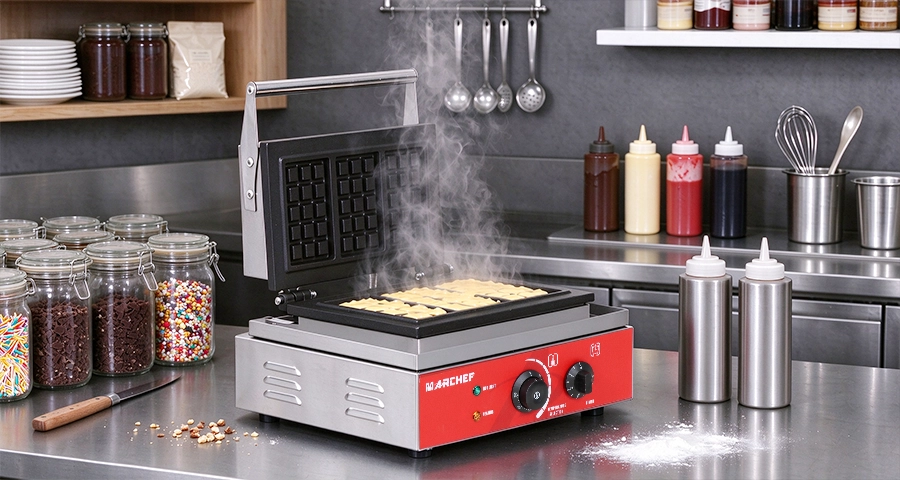
I spent years inspecting commercial kitchen lines, and I saw operators buy the cheapest machines only to pay double on maintenance later. In this guide, I break down the real numbers and show you how modular purchasing protects your margin.
How Does Capital Expenditure Compare To Operational TCO?
Low initial purchase prices look great on paper, but frequent repairs drain your budget quickly. Your team suffers when equipment breaks. You need a full view of ownership costs.
Capital expenditure represents only a small fraction of total cost of ownership. Over five years, technician labor fees, lost breakfast sales, and freight costs for full-unit returns routinely exceed the initial purchase price of standard commercial waffle makers.
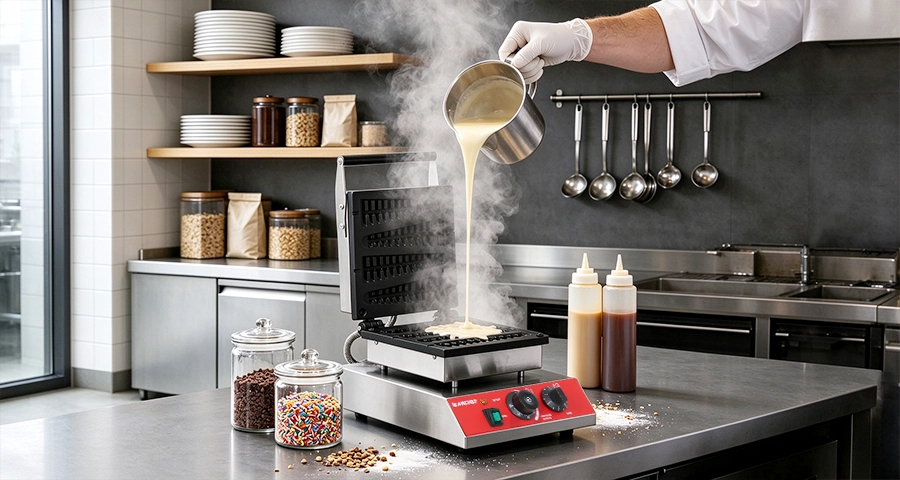
I always tell procurement managers to evaluate the five-year balance sheet before signing purchase orders. Most buyers only look at the invoice price. They miss the hidden costs that hit kitchen operations every month.
Purchase Price vs. 5-Year Repair Overhead
A low machine price often hides high repair costs. When a single non-modular waffle maker fails, a technician charges high call-out fees just to open the frame. Over five years, these service invoices surpass the machine cost.
Freight Costs on Full-Unit RMA Returns
Returning a heavy full chassis back to a supplier incurs heavy logistics fees. Full-unit returns often burn forty to sixty percent of the unit value in freight alone.
Budgeting for Replacement Modules vs. Whole Units
Smart operators budget for swappable parts rather than complete machines. Buying modular sub-assemblies keeps capital free and stabilizes operational budgets.
| Cost Component | Standard Non-Modular Unit | Modular Plate Unit |
|---|---|---|
| Upfront Machine Price | Lower | Moderate |
| 5-Year Labor & Service Fees | Exceeds initial machine price | Minimal (in-house swap) |
| RMA Return Freight | 40% to 60% of unit price | Negligible (plate only) |
| Replacement Unit Strategy | Complete machine replacement | Single component swap |
Can Modular Parts Optimize Spare Inventory And Working Capital?
Storing full backup appliances clutters storage rooms and locks up working capital. When machines fail, staff scramble for spares. Modular parts solve this storage and cash flow headache.
Modular parts optimize working capital by replacing full backup machines with compact spare plates. Chains only need a two-plate buffer per location. This strategy lowers warehouse storage demands, reduces dead stock, and keeps equipment cash available for business growth.
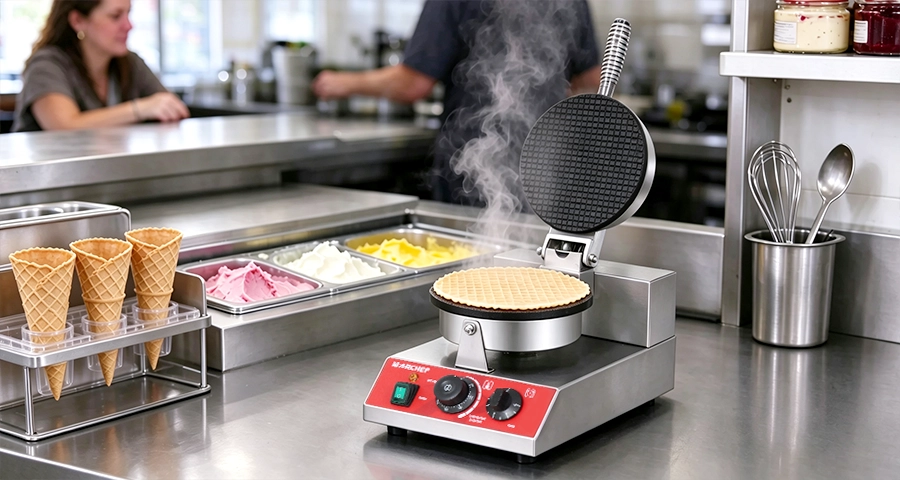
I watched kitchen storage rooms overflow with dead equipment for years. Multi-unit chains often buy ten complete machines just to support fifty stores. This practice wastes money and shelf space.
The “2-Plate Buffer” Sourcing Model
I recommend keeping just two spare plates on site for each waffle maker. If carbon builds up or a heating coil fails, staff switch the plate. The kitchen stays open without an extra machine on the rack.
Reducing Dead-Stock Capital for Multi-Unit Chains
When every restaurant stocks complete machines, dead stock freezes your bank accounts. Swappable plates free that cash. Operators can invest that capital into food quality or marketing instead.
Slashing Warehouse Footprint for Equipment Dealers
Dealers who stock bulky whole units pay high rent for warehouse space. Stocking modular plates cuts storage volume by eighty percent and lets distributors ship parts on standard shelves.
| Inventory Metric | Full Backup Model | 2-Plate Buffer Model |
|---|---|---|
| Storage Space Needed | High (full chassis footprint) | Minimal (shelf stackable) |
| Capital per Backup Node | 100% machine cost | 15% to 20% machine cost |
| Risk of Dead Stock | High when models update | Low with unified plates |
| Inventory Turnover Rate | Slow | Fast |
How Do Modular Parts Shorten Supply Chain Lead Times?
Long factory return cycles leave your stations empty for weeks. Customers wait while shipments crawl across borders. You can fix slow supply lines with lightweight parts.
Modular parts shorten supply chain lead times by reducing shipping weight and part complexity. Instead of sending heavy chassis units on slow ocean freight, teams ship lightweight plates via airfreight. Standardized mounting systems also allow fast part distribution across multiple kitchen concepts.
I know the pain of waiting six weeks for an ocean container to bring replacement equipment. Fast breakfast kitchens cannot wait weeks for a single waffle maker.
Consolidating Spare Parts SKU Complexity
Using unified plate designs across different food stations reduces the total number of parts you order. One standard heating plate fits several machine bodies. This setup simplifies your purchase orders.
Airfreight Savings on Lightweight Heating Plates
Shipping a complete commercial waffle maker by air is expensive because the steel base is heavy. A single cast plate weighs very little. Airfreight for plates takes three days and costs a fraction of full-unit shipping.
Localized Parts Sourcing vs. Factory Return Cycles
Factory return cycles take months of back-and-forth communication. When you manage a modular inventory, local distribution hubs can stock plates easily. Your local team solves equipment failures without overseas factory delays.
| Logistics Factor | Complete Unit Shipping | Modular Plate Airfreight |
|---|---|---|
| Shipping Duration | 4 to 8 weeks (ocean) | 3 to 5 days (express air) |
| Freight Weight | 15 kg to 25 kg | 2 kg to 4 kg |
| Supply SKU Count | Multiple distinct chassis SKUs | Single standardized plate SKU |
| Cross-Border Hassle | High customs paperwork | Simple parcel clearance |
What Protects Kitchen Uptime Against Operational Risk?
Equipment breaks during the morning rush and halts food orders. Angry diners walk out while staff look for tools. Fast maintenance stops this operational disaster.
Kitchen uptime stays protected through tool-free, quick-release plate mechanisms. Kitchen staff replace failed or dirty heating grids in under two minutes without calling service technicians. This rapid swap prevents breakfast revenue loss, protects customer satisfaction, and eliminates expensive technician call-out charges.
A line cook cannot repair complex electronics when hungry customers line up at eight in the morning. When equipment fails at peak hours, every minute of delay loses money.
Bypassing On-Site Technician Service Fees
Calling a technician costs money before they even touch a screw. With modular hardware, store staff handle the issue themselves. You bypass expensive after-hours labor charges completely.
Zero Revenue Loss During Peak Operating Hours
If a grid fails during brunch, a two-minute plate change saves the morning service. Kitchen staff keep waffle orders moving. Customers receive their meals on time without noticing a problem.
Tool-Free 2-Minute Plate Replacement
I always test locking latches directly on factory floors. A proper quick-release system requires no screwdrivers or wrenches. Line cooks unclip the cold plate, slide in the backup, and resume cooking immediately.
| Operational Metric | Traditional Fixed Hardware | Tool-Free Quick-Release |
|---|---|---|
| Repair Time | 24 to 72 hours (awaiting tech) | Under 2 minutes (on the line) |
| Line Cook Involvement | None (requires technician) | Full (simple latch release) |
| Morning Revenue Impact | High loss during peak hours | Zero sales disruption |
| Tool Requirements | Screwdrivers and specialty tools | Zero tools required |
Which Specs Belong On A B2B Procurement Checklist?
Vague equipment specifications lead to poor machine durability and failed inspections. Kitchen fires or health fines ruin your brand. Clear engineering specs prevent these costly errors.
A complete procurement checklist requires heavy-duty pivot hinges rated above 100,000 cycles, die-cast plates with embedded tubular heating elements, and dual safety certifications like CE and ETL/NSF. These specifications ensure uniform heat distribution, eliminate cold spots, and prevent municipal inspection delays.
I have built kitchen equipment for decades, and small engineering details always decide machine lifespan. Buyers who skip the spec sheet pay for it later in food waste and short circuits.
Mechanical Latch Durability Ratings
Weak hinges fail fast under heavy daily use. I check that all mechanical hinges have ratings over 100,000 cycles. Weak latches cause plate misalignment, uneven dough contact, and heat loss.
Heating Element Uniformity & Cold-Spot Prevention
Cheap waffle makers use clamp-on heating elements that create cold edges. Die-cast plates with embedded tubular heating elements recover heat quickly and bake each waffle evenly from center to edge.
Electrical Safety & Sanitation Certifications (CE, ETL, NSF)
Dual certifications protect your business from local health inspectors. Units with ETL, NSF, and CE certifications pass all local kitchen health checks and prevent expensive operational shutdowns. Quick-connect wiring also isolates faults so you replace single wires instead of entire control boards.
| Technical Feature | Poor Specification | Commercial Standard Spec |
|---|---|---|
| Pivot Hinge Rating | Under 50,000 cycles | Over 100,000 cycles |
| Heating Design | Clamp-on heating wires | Embedded tubular heating element |
| Wiring Architecture | Soldered direct harnesses | Quick-connect modular harness |
| Certification Standard | Uncertified or single mark | Dual-certified (CE, ETL, NSF) |
Conclusion
Modular waffle maker procurement eliminates downtime, cuts spare parts storage, and slashes maintenance expenses. Focus on swappable plates and solid certifications to protect your kitchen margins.