
Gas bans are coming fast to commercial kitchens. Many restaurant owners feel stressed about high conversion costs, complex rewiring, and major daily operational disruptions.
Switching your commercial kitchen to all-electric power helps you meet strict building codes, cuts utility bills, boosts thermal efficiency up to 90%, and creates a cooler, safer work environment for your culinary staff.
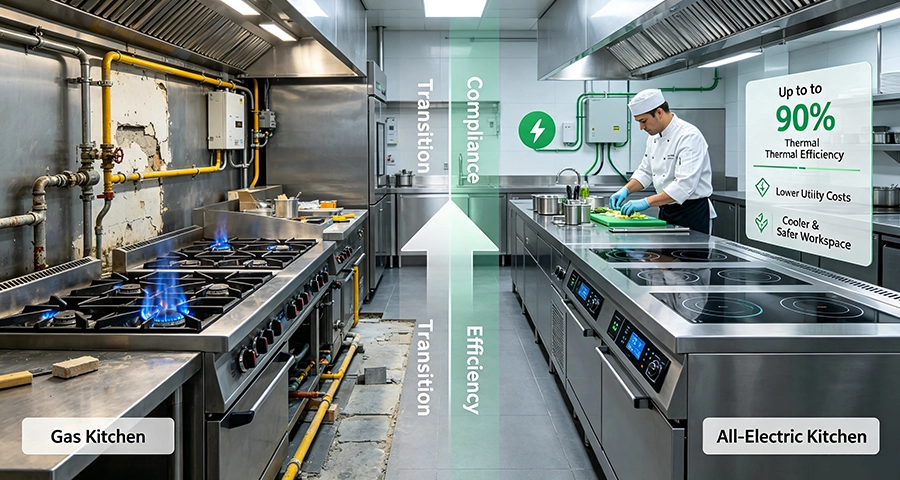
You might think your current gas lines will last forever, but new environmental laws are changing the industry quickly. Reading this guide will help you understand every single step of this vital energy transition so you do not waste money on wrong decisions.
Understanding Gas Restrictions and Energy Codes in North America and Europe?
City planners are banning natural gas in new commercial buildings. Are you worried that your next kitchen location will fail code inspections and cost you thousands in fines?
Governments in North America and Europe are passing strict decarbonization laws, which force new food businesses to install clean all-electric commercial kitchen equipment instead of traditional gas lines.
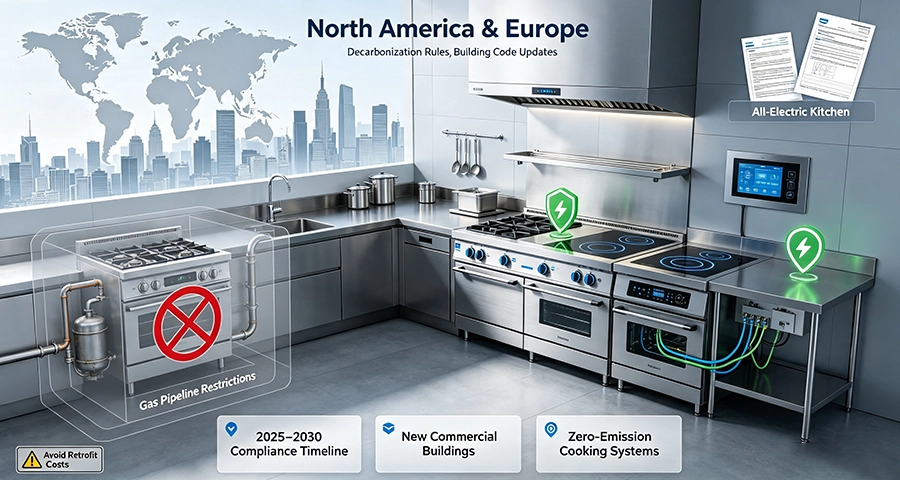
Cities across Europe and North America update building codes every year to improve indoor air quality. Municipalities now target commercial kitchens because old gas appliances release carbon emissions inside tight workspace areas. I ran into this exact policy barrier when helping a major food brand expand last year. We had to rethink the entire power setup before opening the doors.
Local Building Rules and Clean Energy Timelines
The push for green buildings is no longer optional. Modern rules require lower carbon output for every square foot of cooking space.
| Region | Primary Policy Focus | Compliance Deadline | Target Equipment Impact |
|---|---|---|---|
| North America | Municipal Gas Bans & Building Codes | 2025 – 2030 | New Commercial Construction |
| Europe | Carbon Reduction & Energy Efficiency | 2024 – 2028 | All Commercial Foodservice |
Gas Line Restrictions in New Buildings
- Cities prohibit new natural gas pipe connections in new commercial structures.
- Inspectors demand zero-emission cooking systems before approving operating permits.
- Lease agreements in modern business parks now mandate all-electric kitchen setups.
Property developers must choose electric appliances early in the blueprint stage. Retrofitting old gas lines later costs double the initial build price.
Key Differences in Thermal Efficiency Between Gas and Commercial Induction?
Gas burners waste massive heat and drain your monthly budget. Are you tired of paying enormous energy bills while your kitchen stays uncomfortably hot?
Commercial induction units deliver 85% to 90% thermal efficiency by heating magnetic cookware directly, while traditional gas burners lose over 60% of their heat into the room.
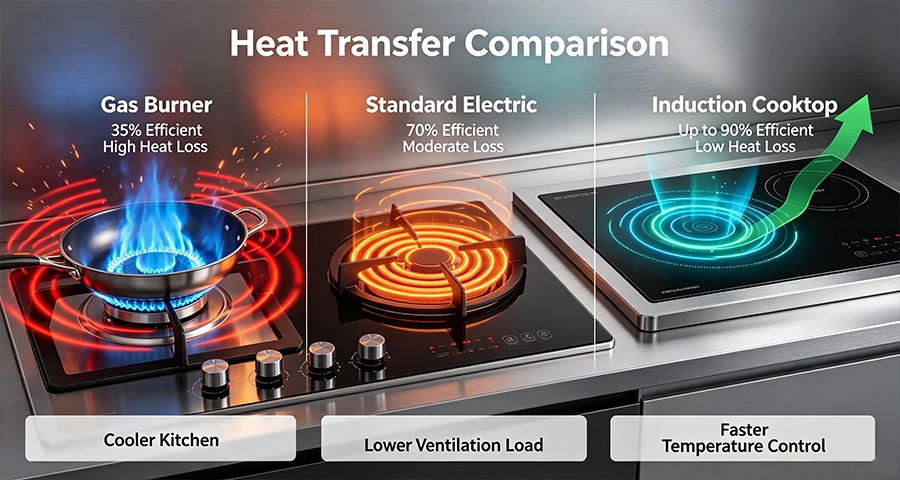
Gas flame heating is very inefficient. Most heat escapes around the sides of the pan and heats up the ambient air. Induction technology uses electromagnetic fields to send energy directly into the metal cookware. This direct transfer saves energy and keeps your workspace cooler throughout the day.
Energy Transfer and Heat Loss Analysis
When energy goes directly into the pan, less power is needed to cook food.
- Gas Burners: 35% efficiency, high heat loss, high ambient room temperature.
- Standard Electric: 70% efficiency, medium heat loss, slow temperature adjustment.
- Induction Cookers: 90% efficiency, low heat loss, fast temperature control.
Impact on Kitchen Exhaust and Ventilation Costs
Lower ambient heat completely changes your exhaust needs.
- Reduced Air Volume: You need lower exhaust fan speeds to pull heat out.
- Smaller Exhaust Hoods: You can install smaller, cheaper hood systems.
- Lower HVAC Expenses: Air conditioning units do not have to fight kitchen heat.
I tested this in one of our test facilities. Turning off gas ranges dropped room temperatures by 15 degrees in two hours. Your staff will stay fresh, and your air conditioning bill will drop fast.
Operational Impact of Electrification on High-Volume Kitchen Output and Speed?
Slow ticket times during peak hours ruin customer experiences. Are your chefs struggling with slow heating gas ranges when orders pile up high?
Electric and induction appliances feature rapid preheat cycles and instant thermal recovery times, allowing high-volume kitchens to finish orders much faster during busy meal times.
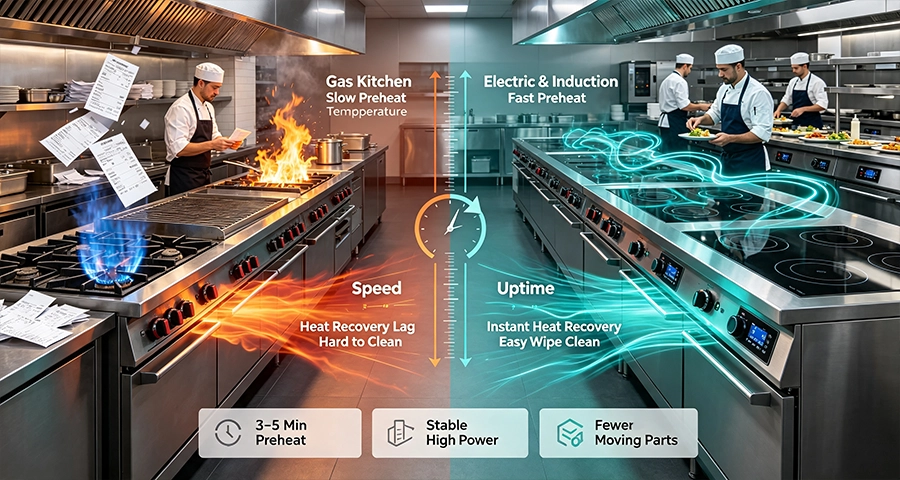
Speed wins in the food service business. High-wattage electric appliances maintain steady heat even when frozen food hits the pan. Chefs do not need to wait for temperatures to recover between batches. This steady speed keeps the kitchen line moving fast during peak hours.
Comparing Speed and Kitchen Performance
Faster heating means shorter wait times for hungry customers.
| Performance Metric | Traditional Gas Ranges | Modern Electric & Induction |
|---|---|---|
| Preheat Speed | Slow (15–20 minutes) | Fast (3–5 minutes) |
| Thermal Recovery | Lagging under heavy loads | Instant heat response |
| Daily Surface Cleaning | Hard (removable iron grates) | Easy (flat glass surfaces) |
Kitchen Maintenance and Hygiene Benefits
Modern electric equipment makes daily kitchen operations smoother for your team.
- Sealed Flat Surfaces: Flat glass tops make wiping down grease quick and easy.
- Fewer Moving Parts: No gas valves or pilot lights that break over time.
- Consistent Temperature Control: Digital controls ensure exact cooking temperatures for every shift.
Fewer mechanical parts mean fewer emergency repair calls. Your maintenance team spends less time fixing broken igniters and more time focused on essential tasks.
Essential Infrastructure and Electrical Upgrades Needed Before Transitioning?
Upgrading your kitchen power system can cause unexpected budget surprises. Are you worried that your current building electrical panel cannot support heavy commercial equipment?
Transitioning to an all-electric commercial kitchen requires upgrading your electrical main service panel, installing 480V three-phase power infrastructure, and deploying automated power management systems.
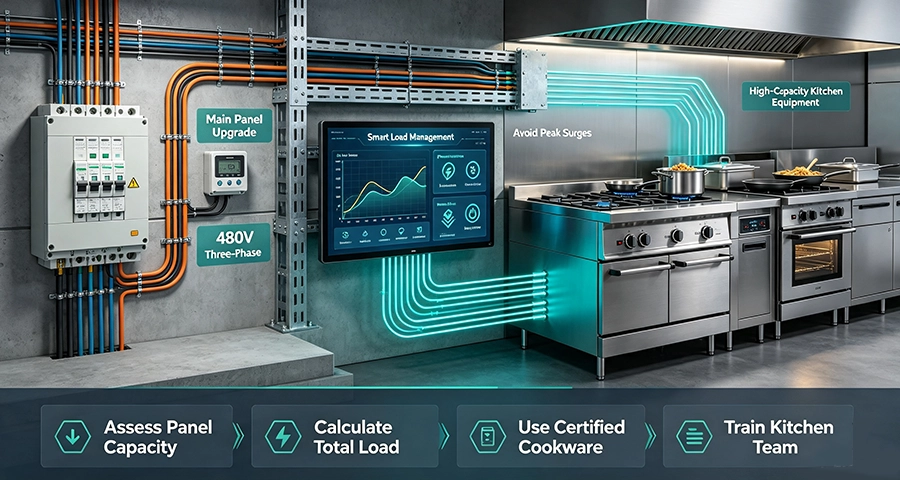
Electric kitchen gear requires high amperage to run high-heat fryers, griddles, and ovens simultaneously. Older buildings often lack the raw power capacity to run multiple high-wattage units at once. You must plan your electrical panel upgrades long before you buy new equipment.
Power System Needs for Electric Kitchens
High-capacity kitchen gear requires solid electrical planning from certified experts.
- Main Panel Upgrade: Increase total building amperage capacity to handle heavy power draw.
- 480V Three-Phase Lines: Supply stable power for industrial fryers and large griddles.
- Smart Load Management: Prevent high peak power surges that drive up electric utility fees.
Step-by-Step Equipment Transition Guide
- Audit your current electrical panel capacity with a licensed electrician.
- Calculate total wattage demand for all planned kitchen equipment.
- Switch cookware to certified magnetic stainless steel or cast iron.
- Retrain cooking staff on precise digital controls and pan-contact rules.
Proper planning keeps your utility bills predictable and stops sudden breaker trips during dinner service. Taking these precise steps ensures a smooth, successful shift to modern kitchen technology.
Conclusion
Switching to an all-electric commercial kitchen lowers utility costs, meets strict building codes, improves cooking speed, and keeps your staff comfortable every day.