
Chipped blades ruin expensive frozen meat blocks and shut down processing lines without warning. This unexpected downtime costs money and frustrates kitchen teams while waste piles up rapidly every single hour.
To prevent blade chipping on deep-frozen meats, temper blocks to -4°C to -2°C, utilize cryogenic-treated alloy blades with 58 to 62 HRC hardness, apply industrial hard chrome plating, and maintain calibrated mechanical blade tension to eliminate lateral chatter during continuous cutting.
Blade failures create unnecessary safety risks, so understanding the physical relationship between meat temperature, steel metallurgy, and machine adjustment will help you preserve your equipment and stop costly replacement cycles immediately.
Why Does Alloy Metallurgy Matter for Processing Hard Frozen Meats?
Rock-hard ice crystals smash against cold steel cutting edges with severe force every minute. Poor blades crack under this constant stress, leaving dangerous metal fragments directly inside meat products.
Alloy metallurgy determines blade resilience because high-carbon chromium steels like 100Cr6 and X50CrMoV15 supply fine carbide grain distributions that absorb extreme impact shock from frozen ice crystals, preventing microscopic fractures when cold-hardened blocks strike spinning edges.
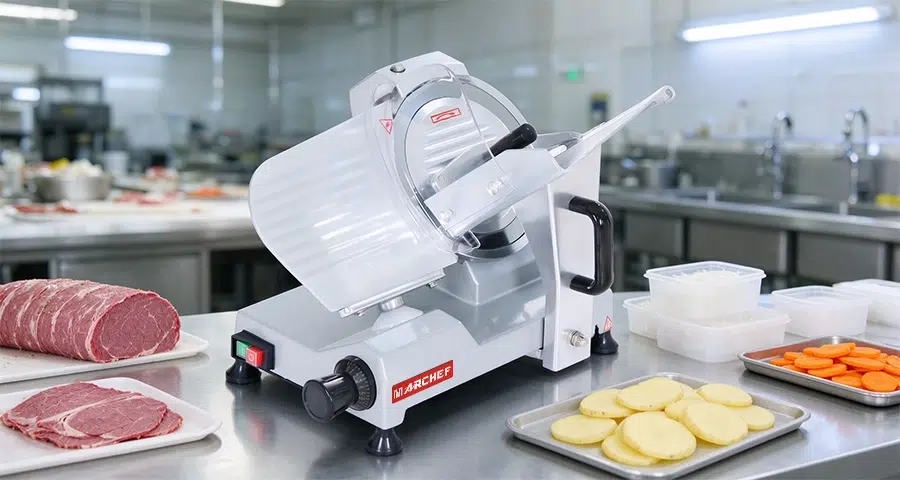
Critical Material Properties and Temperature Control
I have seen many commercial kitchens lose thousands of dollars each month simply because staff members force deep-frozen meat blocks through standard slicer blades. When meat drops below -18°C, water turns into rock-hard ice crystals that behave exactly like tiny stones. If your blade steel lacks ductile toughness, these ice grains smash straight into the cutting bevel. High-grade alloy steels solve this mechanical problem through specialized composition and controlled thermal processing. Sub-zero cryogenic tempering converts soft retained austenite into uniform, wear-resistant martensite. This fine microscopic matrix allows thin edges to flex microscopically under sudden impact instead of fracturing away in small flakes. Tempering your frozen blocks to a crust-freezing range of -4°C to -2°C further reduces cut resistance, saving your cutting edges from dangerous deflection.
| Steel Grade / Property | Material Composition | Primary Operational Benefit | Ideal Product Temperature |
|---|---|---|---|
| 100Cr6 High-Carbon Alloy | 1.0% Carbon, 1.5% Chromium | Fine carbide distribution, superior shock absorption | -4°C to -2°C (Tempered) |
| X50CrMoV15 Martensitic | Carbon, Chromium, Molybdenum, Vanadium | High corrosion defense, excellent ductile edge retention | -4°C to 0°C |
| Standard Carbon Steel | Basic Carbon Steel | Cheap initial purchase, high micro-chipping risk | > 0°C (Fresh meats only) |
How Do Blade Hardness and Chrome Plating Impact Edge Retention and Corrosion?
Soft blades roll over quickly and tear meat fibers into messy piles. Meanwhile, over-hardened steel snaps off like glass under heavy load, causing massive contamination hazards across clean prep surfaces.
Optimal slicer blades balance hardness strictly between 58 and 62 HRC to prevent edge rolling or brittle cracking, while 5 to 15 microns of hard chrome plating seal the alloy against corrosive blood salts and lower friction.
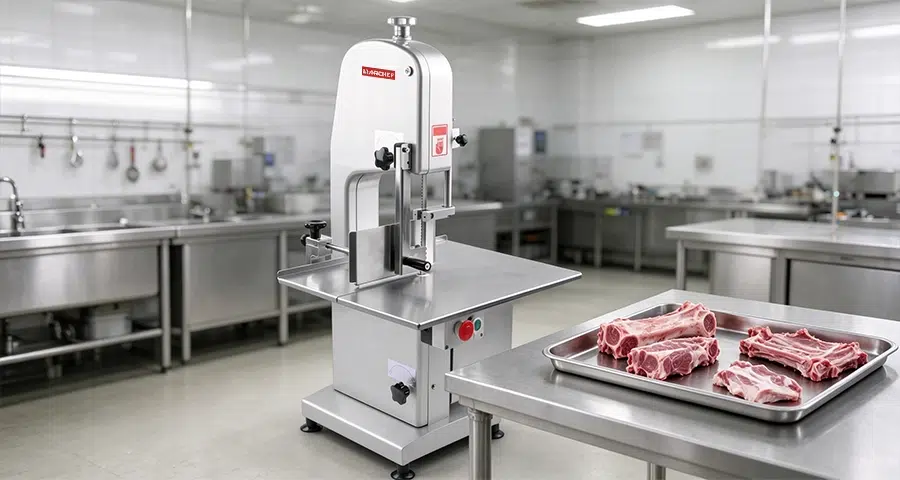
Balancing Rockwell Hardness with Friction Reduction
During my early days working directly on commercial kitchen cutting lines, I assumed that a harder blade always meant a better cut. That assumption cost me plenty of ruined blades. If a blade tests above 62 HRC, the edge becomes far too brittle for dense frozen muscle fibers and bone chips. The edge will simply shatter when it meets heavy resistance. If the steel hardness drops below 58 HRC, the thin cutting edge rolls over within a few hours of operation, producing torn, ragged meat slices instead of clean portions. Hard industrial chrome plating provides the necessary protective barrier. It seals raw high-carbon steel against corrosive organic acids, blood brine, and aggressive chemical sanitizers. Furthermore, the low friction surface stops thick frozen fats from dragging across the blade face.
| Blade Hardness Range | Mechanical Edge Behavior | Operational Consequence | Surface Coating Role |
|---|---|---|---|
| Below 58 HRC | High ductility, zero brittleness | Rapid edge rolling, torn meat portions | Heavy product drag without chrome |
| 58 to 62 HRC (Optimal) | Balanced toughness and wear resistance | Long sharpening intervals, clean slices | 5-15µm chrome reduces drag and rust |
| Above 62 HRC | Extreme hardness, zero ductility | Catastrophic edge fracturing, chipped teeth | Coating cannot prevent brittleness |
How Do Bone Saw Tensioning and Tooth Geometry Minimize Bone Dust and Waste?
Wandering saw bands create uneven cuts, ruin valuable bone-in meats, and spray thick bone dust across entire products. This heavy waste frustrates staff and lowers overall product yields dramatically.
Proper bone saw performance requires a coarse 3 to 4 TPI configuration with deep radiused gullets to eject marrow paste, balanced by spring-loaded automatic tensioning mechanisms that prevent band wandering and excessive kerf width.
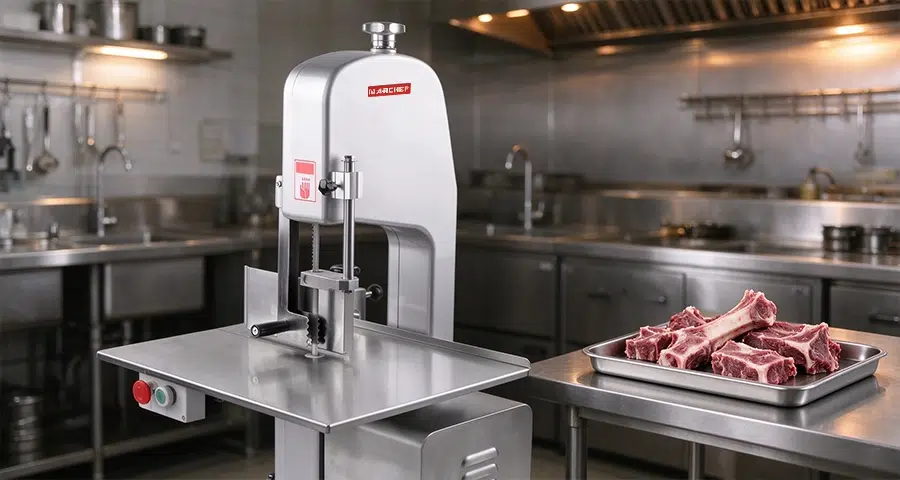
Tooth Geometry and Dynamic Load Management
I spent months watching meat cutters struggle with cloudy, unappealing cuts caused by bone dust buildup before realizing the root cause was bad blade tension. When a saw blade lacks adequate tension, the band wobbles from side to side inside the cut. This lateral movement widens the kerf, wastes meat mass, and generates excessive bone meal. Conversely, over-tightening a rigid screw assembly concentrates mechanical stress directly into the tooth gullet radii, creating micro-cracks that snap bands unexpectedly. Automatic spring-loaded tensioning assemblies absorb dynamic shock loads and compensate for thermal expansion during long cutting shifts. Pairing this mechanism with coarse 3 to 4 TPI tooth geometry gives bone chips enough gullet space to evacuate cleanly without burning the meat fibers through friction.
| Saw Component / Metric | Ideal Specification | Operational Impact on Cut | Common Failure Symptom |
|---|---|---|---|
| Tooth Pitch (TPI) | 3 to 4 TPI (Power bandsaws) | Deep gullets actively clear marrow paste | High bone dust from clogged teeth |
| Tooth Set Profile | Precision raker or wavy set | Kerf clears blade gauge to stop friction burn | Blade binding and burned tissue |
| Tension Mechanism | Force-controlled spring assembly | Accommodates thermal expansion and shock | Snapped bands from rigid overtightening |
Conclusion
Protecting cutting blades on frozen meat requires tough 58-62 HRC alloy steel, hard chrome plating, -4°C product tempering, and calibrated tensioning systems with coarse tooth profiles to eliminate chipping.