
Fast-food kitchens lose money every day. Cooked food gets cold and soggy during peak delivery hours.
Commercial heated holding cabinets keep food hot and crisp for hours. They use forced-air circulation, moisture control, and precise electronic thermostats to stop food quality loss.
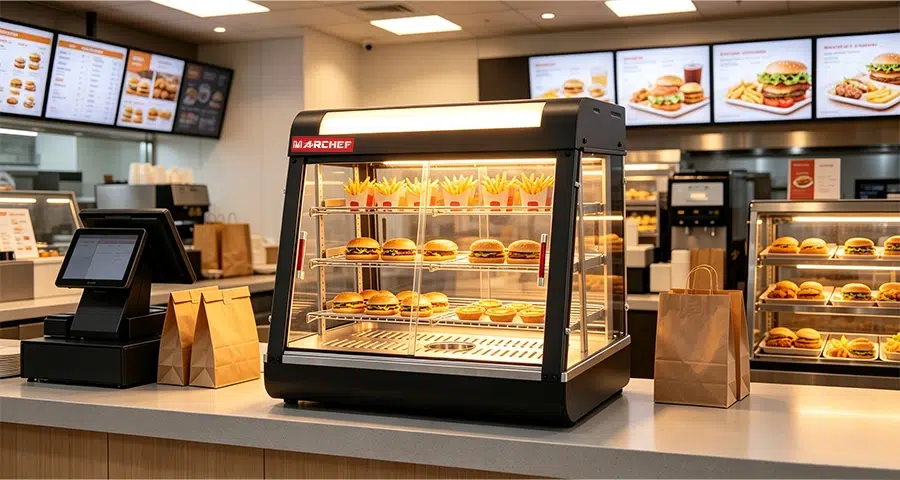
I spend long hours in our workshop testing new warming units. Let me share how we build these machines to keep food fresh.
What Causes Food Quality Loss During Industry Holding Stages?
Kitchen teams struggle with soggy fries. Customer complaints destroy your restaurant reputation very fast.
Food loses quality because of uneven heat distribution inside cheap warmers. Modern holding cabinets solve this with precise temperature and humidity management.
Why Does Delivery Food Lose Its Texture So Fast?
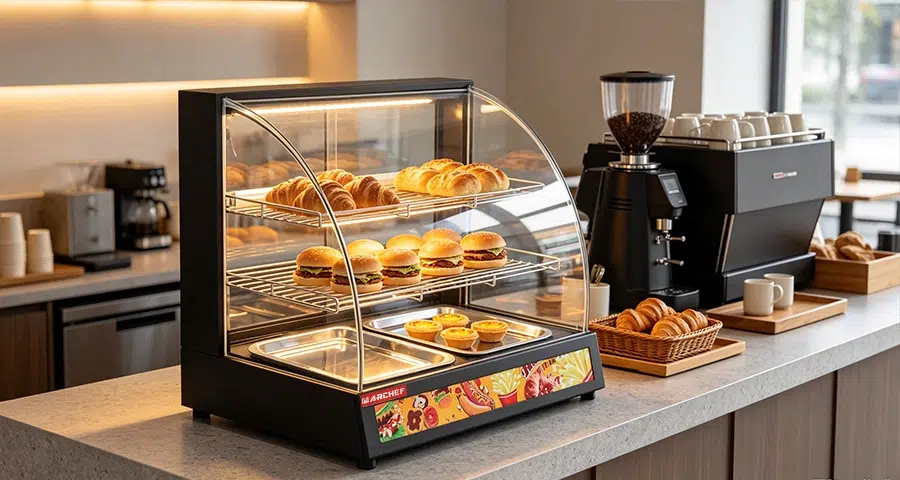
Quick-service restaurants face constant pressure during rush hours. Cooked food sits in open air too long. Water vapor trapped inside standard storage boxes makes crispy items soggy. At the same time, dry heat removes natural juices from roasted meat. I test every unit in our workshop to make sure food safety standards stay high. Proper design stops these exact issues and keeps food texture perfect for every customer.
How Do Holding Cabinets Protect Food Safety Standards?
Kitchen staff need reliable tools to hold food safely. Bacteria grow rapidly in warm food zones if temperatures drop too low. Our holding cabinets maintain strict temperature thresholds to block bacterial growth. At the same time, smart airflow systems keep the outer crust of fried items crunchy.
| Issue in Kitchens | Traditional Warmer | Modern Holding Cabinet |
|---|---|---|
| Moisture Control | None, traps steam | Independent humidity regulation |
| Temperature | Hot spots, variable | Uniform forced-air circulation |
| Food Texture | Soggy or dried out | Crispy outside, juicy inside |
How Does Core Engineering Maintain Perfect Heat and Moisture?
Poor internal airflow ruins batch after batch of hot food. Your kitchen wastes money on ruined meals and high power bills.
Modern holding cabinets use forced-air circulation, independent moisture control, and heavy-duty stainless steel insulation. These systems eliminate hot spots and lock in stable thermal energy.
How Does Forced-Air Circulation Improve Heat Uniformity?
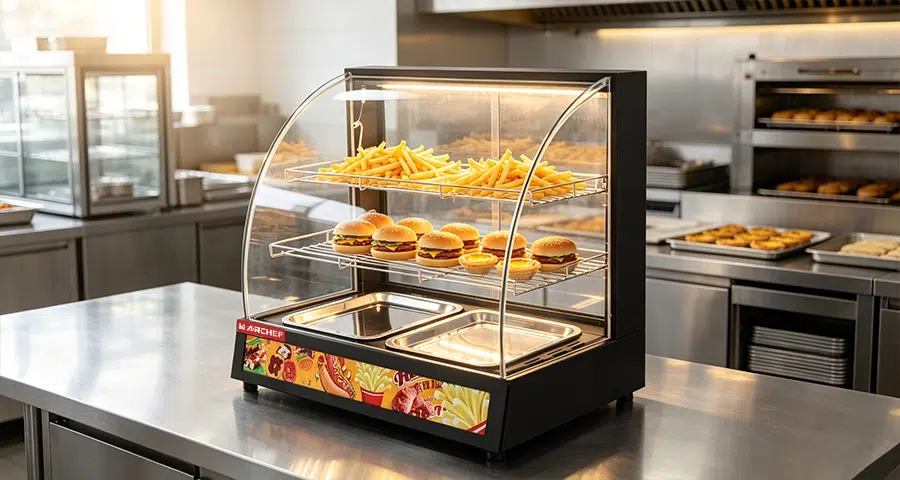
Forced-air circulation fans push warm air across every shelf in a continuous loop. This design removes temperature differences between top and bottom racks. Every piece of food receives identical heat exposure. You get consistent results across all storage levels. I watch our assembly teams install these high-performance fans every single day. We check each motor to ensure smooth airflow and long operational life under heavy commercial workloads.
Why Is Independent Moisture Control Essential for Food Quality?
Independent moisture control systems let kitchen staff adjust water vapor levels manually. You can keep fried items crisp while keeping delicate proteins soft and moist. Heavy-duty stainless steel walls paired with high-density polyurethane insulation stop heat from escaping into the workspace. I select high-grade metal sheets for our cabinet bodies. This heavy construction traps thermal energy efficiently and lowers overall power consumption during long service shifts.
| Engineering Feature | Technical Function | Operational Benefit |
|---|---|---|
| Forced-Air Fans | Continuous air movement | Eliminates internal hot spots |
| Moisture Control | Adjusts water vapor | Prevents sogginess and drying |
| Stainless Steel | Heavy-duty insulation | Reduces external heat loss |
Why Are Safety Compliance and Thermal Efficiency Vital for Kitchens?
High utility bills and failed health inspections eat away at your profit margins. You need equipment that passes strict global rules.
International safety standards like CE and ETL prove our equipment is safe and reliable. High thermal efficiency also lowers daily utility costs in busy commercial kitchens.
What Do Safety Certifications Mean for Commercial Equipment?
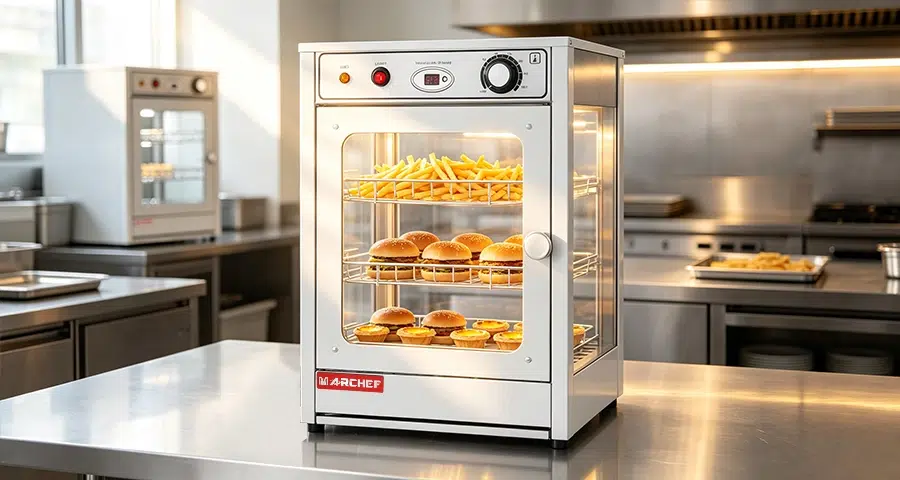
Commercial kitchen owners care deeply about certifications and operating costs. Equipment installed in busy markets must meet strict electrical and public health codes. Our holding units hold official CE and ETL compliance certifications. These badges prove our adherence to rigorous global safety benchmarks. I work closely with our quality testing team to verify every electrical component before it leaves our production floor.
How Does Thermal Efficiency Reduce Kitchen Operating Costs?
Thermal efficiency plays a massive role in your daily utility overhead. Low-energy heating elements and thick insulation reduce electricity consumption during peak operational hours. Antimicrobial touchpoints and smooth coved corners also make daily sanitation easy for kitchen staff. I review our insulation density standards regularly to ensure maximum heat retention and minimal power waste for busy restaurant operators.
| Requirement | Standard Met | Advantage for Buyers |
|---|---|---|
| Safety Certification | CE and ETL | Legal operation in global markets |
| Energy Use | Low-energy heating elements | Lowers monthly utility bills |
| Sanitation | Coved corners, antimicrobial touchpoints | Faster end-of-day cleaning |
Conclusion
Commercial heated holding cabinets protect food texture, ensure safety compliance, and lower utility costs. Proper engineering secures stable margins for your kitchen business.