
Ocean freight delays ruin your peak season plans. You lose sales when containers arrive late. I manage stock safely during crazy shipping times. I will show you how.
You can manage stock during ocean freight problems. You must plan a long buffer. You should book full containers. You need to share sales data with your factory. This plan helps you avoid high costs. It keeps your warehouse full of top equipment before the busy season begins.
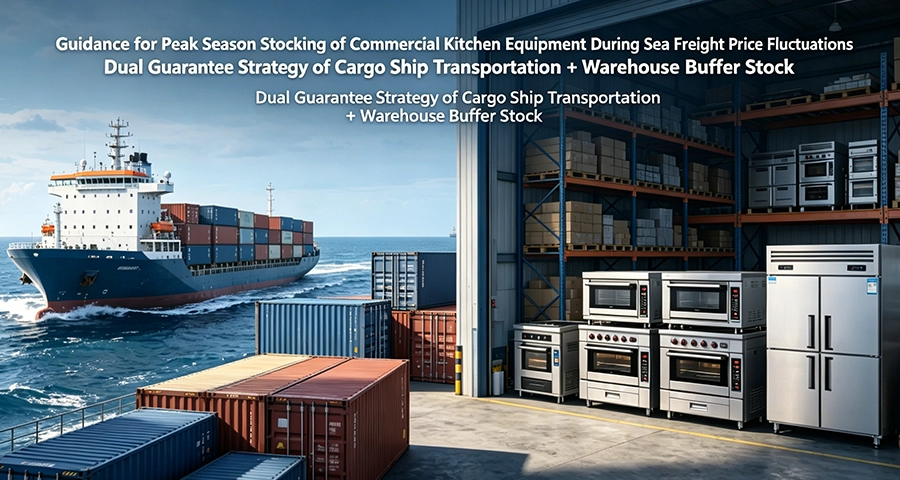
You want to keep your profit margins safe. You also need to keep your customers happy. Let us look at the best ways to solve these shipping problems together.
Timeline Alignment: Ensuring Equipment Delivery Matches Restaurant Opening Dates?
Delayed equipment pushes back restaurant opening days. Angry owners will blame you for the lost time. I use smart timeline planning. It fixes this exact problem for good.
You must add a four-week buffer to your schedule. This ensures restaurant equipment arrives before opening day. You should also route shipments through different ports. This avoids local strikes and bad traffic.
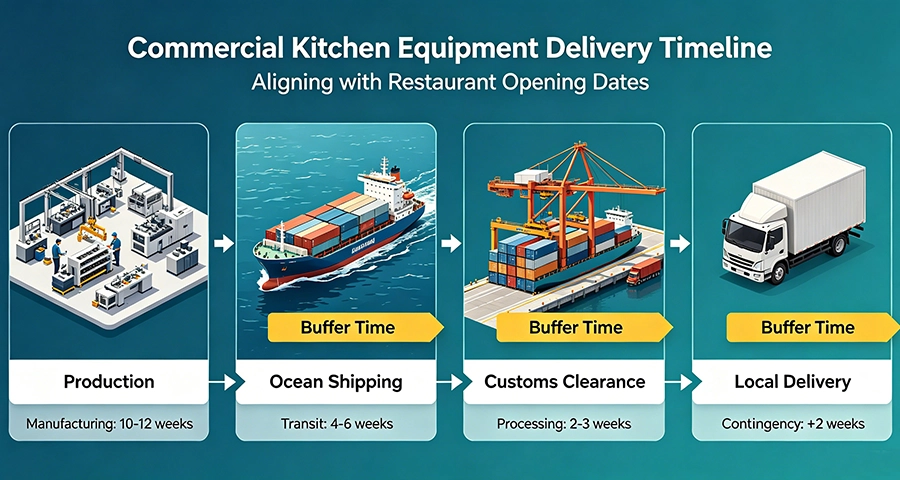
I remember a client.He almost lost a big project. His fryers were stuck in port traffic. After that, we changed our whole planning system. We now use a strict timeline method. You need to break down your schedule. This avoids late deliveries.
How to Plan Your Delivery Timeline
You must track every step of the journey. You order refrigeration equipment from my factory in Guangzhou. We calculate the real transit time. We do not just guess.
| Shipping Stage | Standard Time | Buffer Time Needed | Total Planned Time |
|---|---|---|---|
| Factory Production | 20 days | 5 days | 25 days |
| Ocean Transit | 30 days | 14 days | 44 days |
| Port Clearance | 5 days | 7 days | 12 days |
| Local Delivery | 3 days | 2 days | 5 days |
You can see the reason. The buffer is very important. Ocean transit is never perfect. A simple delay at the port ruins a restaurant opening. You can also try nearshore sourcing. You buy small parts locally if a big delay happens. I always tell my B2B buyers to add four weeks extra. This simple rule saves your reputation. You will never explain delayed shipments to angry restaurant owners again.
Margin Protection: Freight Cost Mitigation Strategies for Commercial Kitchen Importers?
High shipping costs eat your hard-earned profits. Sudden price jumps make your business lose money. I have proven strategies. I use them to lock in your shipping rates safely.
You can protect your margins easily. You sign contracts with ocean carriers for stable rates. You should also combine small loads into Full Container Loads. This cuts the shipping cost of each item.
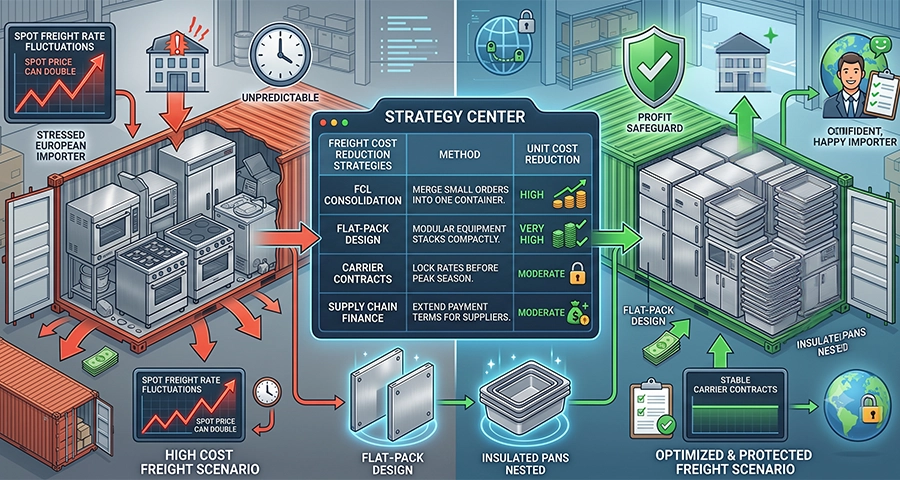
Shipping bulky stainless steel products costs a lot of money. The spot market prices double in one week sometimes. I saw this happen last year. Many European distributors lost their profit. They paid very high spot prices. You must protect your margins.
Tactics to Lower Shipping Costs
You need to be smart. You pack and pay for shipping carefully. I always help my clients maximize their container space.
| Strategy | How It Works | Margin Benefit |
|---|---|---|
| FCL Consolidation | Group small orders into one big container. | Lowers cost per unit fast. |
| Flat-Pack Design | Import modular equipment to save space. | Fits twice as many units inside. |
| Carrier Contracts | Lock in rates before peak season. | Avoids sudden price jumps easily. |
| Supply Chain Finance | Extend payment terms with your suppliers. | Frees up cash for surprise fees. |
I design my warming pans to pack tightly. You ship empty air sometimes. You waste money when you do that. Flat-packed commercial kitchen equipment changes everything. You fit more units into every container. This directly lowers the landed cost per unit. You can also use supply chain financing. This gives you extra cash. You use the cash to pay for unexpected freight surcharges.
Stockout vs. Overstock: Finding the Inventory Sweet Spot for Kitchen Supply Wholesalers?
Empty shelves mean lost customers. A warehouse full of unsold goods ties up your cash. You need a simple system. This system balances your inventory perfectly every time.
You use an inventory analysis to find the sweet spot. You must keep high safety stock for fast-selling items like fryers. You should keep low stock for rare items. This saves your money.
It is hard to guess the equipment needs. Restaurants buy different things. You lose money if you guess wrong. One of my clients bought too many waffle makers. His money was stuck in the warehouse for months. We fixed this problem. We used better data.
How to Use Inventory Analysis
You should divide your kitchen equipment into three simple groups. This tells you exactly what you must buy.
| Inventory Group | Equipment Type | Stocking Rule |
|---|---|---|
| A Items | Fryers, refrigeration units | Keep high safety stock always. |
| B Items | Griddles, panini ovens | Keep moderate stock levels ready. |
| C Items | Niche custom steel parts | Order these parts only when needed. |
You must focus your cash on the ‘A Items’. These are your fast-moving essentials. I make sure my factory always has raw materials ready for these items. You can also use predictive AI supply chain software. This tool tracks live ocean freight data. It helps you change your prices. It helps you change your stock levels in real-time. You will never run out of your best products. You will stop wasting money on slow inventory.
Beyond the Port: How Collaborative Forecasting with Source Factories Solves Shipping Chaos?
Poor communication with factories causes huge delays. You wait weeks for missing materials. We can stop this chaos. We stop it by sharing important information very early.
You share your sales data with your factory. You share your seasonal demand too. This helps them buy raw materials early. This teamwork stops production delays. It gives you a stable supply chain always.
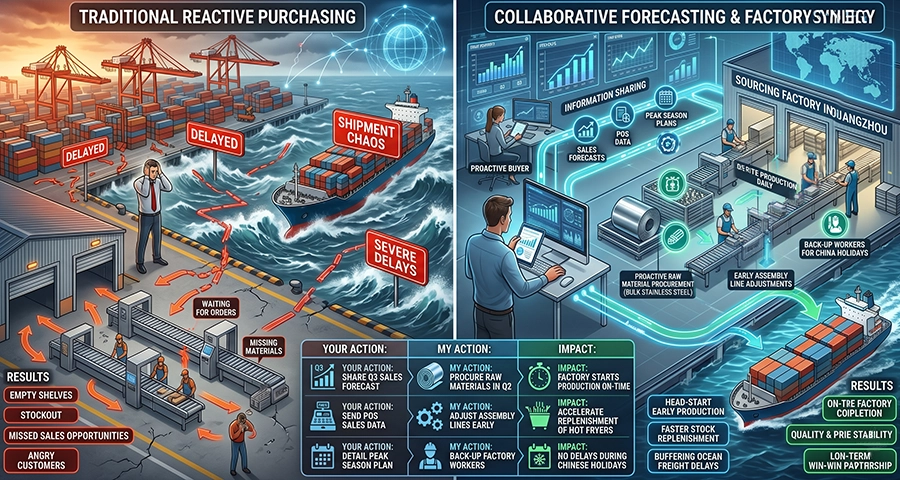
I own two factories in Guangzhou. I see the production side every day. Many buyers do not talk to me. They wait until they need products immediately. This is a big mistake. We must work together. You want top quality and stable prices.
The Power of Sharing Information
You share your plans. I prepare my factory. I buy stainless steel in bulk. I buy it before prices go up.
| Action You Take | Action I Take in Factory | Result for Your Business |
|---|---|---|
| Share Q3 sales forecast | Buy raw materials in Q2 | Factory starts production on time. |
| Send POS sales data | Adjust assembly lines early | Faster restock of popular fryers. |
| Detail peak season plans | Reserve factory workers | No delays during Chinese holidays. |
Communication is your best tool. We talk often. You avoid delayed delivery this way. I want to build a long-term partnership with you. I offer affordable prices. We plan well together to achieve this. Ocean transit times become unpredictable sometimes. Early factory production saves the day. My factory can offset the slow shipping times. We finish your commercial equipment weeks early. We win when we plan together.
Conclusion
You can beat ocean freight problems with smart planning. You book full containers. You plan long buffers. You talk to your factory. This keeps your business strong and profitable.