
Long counter queues hurt peak sales. Slow heating creates kitchen bottlenecks, frustrates hungry customers, and burns out kitchen staff. Choosing the wrong microwave wattage directly reduces daily operational profit.
QSRs and C-stores should select 1800W to 2100W heavy-duty microwaves for peak throughput exceeding 200 cycles daily. Light 1000W units work only for back-office or low-volume reheating under 50 cycles daily, while heavy-duty models cut cook times by up to 60% and prevent line backups.
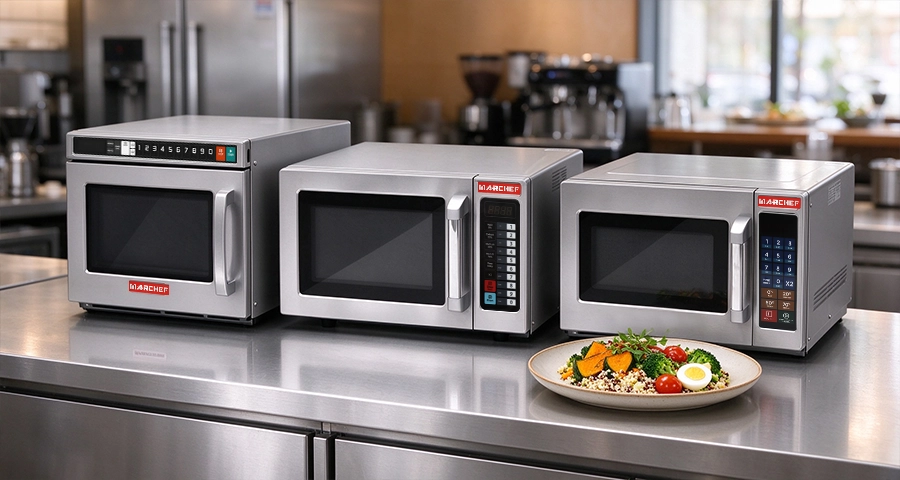
I see many food operations choose the wrong power levels every year. Low-power units create delays that hurt customer retention.
How Do Daily Duty Cycles Impact Your Kitchen Throughput?
Long ticket times destroy lunch rush revenue. Kitchen teams lose precious seconds waiting for slow units to reheat basic food portions. Equipment failure during rush hours ruins customer trust.
Microwaves with 1800W or higher ratings process over 200 heating cycles daily and cut warming times by 40% to 60%. Light-duty 1000W models overheat quickly when pushed past 50 cycles, causing kitchen delays and early hardware failure.
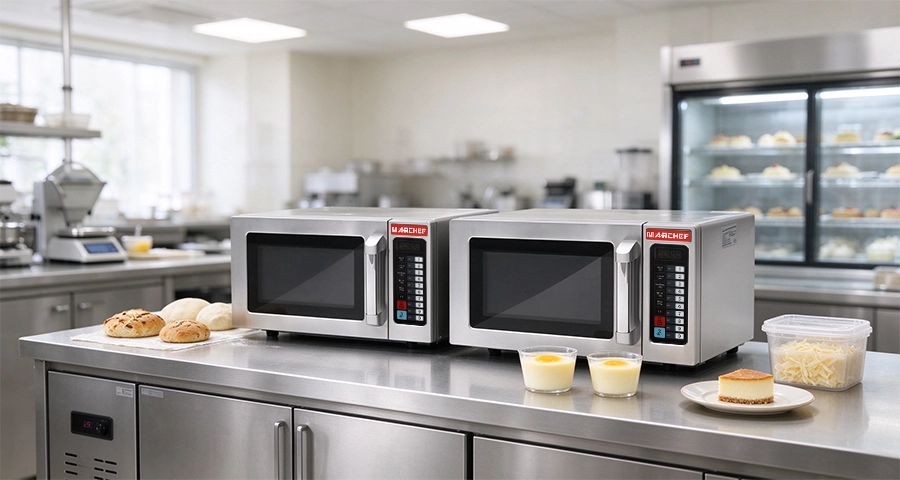
I visited a high-traffic convenience store chain last year. The owner bought five domestic-grade 1000W units to save money. The magnetrons degraded after two months of continuous service. Staff members waited nearly two minutes just to heat a single breakfast wrap. Customers left the line because the wait took too long.
When operators upgrade to 1800W or 2100W machines, reheating times drop instantly. The food reaches target core temperatures in thirty to forty seconds. This speed doubles customer throughput during the critical morning rush. Lower wattage units belong only in low-traffic breakrooms or low-volume stations. High-volume kitchens require industrial power components that maintain speed all day.
1.1 1000W Light-Duty Limits (30–50 Uses/Day)
Light units work well for warming soups or staff meals. They lack internal cooling capacity for repeated firings. Running them past 50 daily cycles burns out internal capacitors quickly.
1.2 1800W+ Heavy-Duty for Peak Hours (200+ Uses/Day)
Heavy-duty units handle non-stop operation during lunch rushes. Heavy transformers handle continuous power loads easily. Kitchen teams can run back-to-back orders without thermal cutoffs.
1.3 Speed Benchmarks: Reheating Times Compared
Higher wattage delivers direct heat transfer into dense food products. Speed gains translate directly into shorter customer wait times and larger daily sales totals.
| Equipment Wattage | Daily Cycle Limit | 350g Burrito Reheat Time | Peak Hour Ticket Capacity |
|---|---|---|---|
| 1000W (Light Duty) | 30 to 50 cycles | 105 seconds | ~30 tickets/hour |
| 1400W (Medium Duty) | 75 to 100 cycles | 65 seconds | ~55 tickets/hour |
| 1800W (Heavy Duty) | 200+ cycles | 42 seconds | ~85 tickets/hour |
| 2100W (Continuous Duty) | 300+ cycles | 34 seconds | ~105 tickets/hour |
Why Does Dual Magnetron Engineering Outperform Single Magnetron Units?
Uneven heating generates customer complaints and returns. Cold spots in food ruin the dining experience and pose real food safety hazards. Fragile rotating glass plates also break often during busy service shifts.
Dual-magnetron engineering delivers microwave energy from both top and bottom sources, eliminating moving turntables completely. This layout guarantees uniform core temperatures, cuts hot spots, and provides built-in redundancy if one magnetron fails during service.
I tested single-magnetron and dual-magnetron units side by side on our factory test benches. Single-magnetron units rely on glass turntables to spin food through wave pockets. In a busy kitchen, staff drop heavy ceramic dishes or metal-rimmed trays onto glass trays. The glass shatters, the motor gears strip, and the kitchen halts operations until a technician arrives.
Dual-magnetron units solve this problem completely. Energy enters the stainless steel cavity from both the roof and base. Static ceramic shelves support heavy commercial pans easily. Dual wave patterns intersect evenly across the whole food surface. If one magnetron fails during lunch service, the secondary magnetron continues heating at half capacity. The kitchen never faces a total equipment shutdown. Forced air channels keep internal electronics cool under non-stop kitchen workloads.
2.1 Top & Bottom Dual Magnetrons vs. Turntables
Turntables have fragile motor pins and fragile glass trays. Top and bottom dual magnetrons bounce energy through fixed ceramic plates, creating clean, reliable cavities with zero moving parts.
2.2 Heat Dissipation Under Continuous Load
Commercial units feature motorized cooling fans and separate duct pathways. Cooling air passes directly over high-voltage transformers and capacitors to stop thermal shutdowns during peak hours.
2.3 Programmable Controls vs. Manual Dials
Rotary dials leave room for employee guesswork and uneven heating. Multi-stage push-button controls allow operators to store exact recipes, ensuring consistent food safety across different store branches.
| Design Feature | Single Magnetron with Turntable | Dual Magnetron with Fixed Shelf |
|---|---|---|
| Energy Feed Path | Side-mounted single beam | Top and bottom simultaneous feed |
| Cavity Base Material | Fragile rotating glass plate | Sealed, heavy-duty ceramic floor |
| Failure Protection | Total failure if tube stops | Continues at 50% power on one tube |
| Cleaning Effort | High (roller ring traps grease) | Low (flat surface wipes clean easily) |
What Are the Real Total Cost of Ownership Risks for Operators?
Cheap home microwaves look attractive on store balance sheets. But buying light-duty units leads to frequent electrical shorts and sudden breakdown costs. Equipment fires and inspection fines damage business reputations permanently.
Commercial kitchens face immediate health shutdowns and voided insurance coverage when using non-certified units. A cheap domestic microwave costs three to four times more over three years due to technician bills, frequent replacements, and lost peak-hour sales.
I often review equipment replacement receipts for growing restaurant groups. Many managers buy five cheap consumer microwaves a year for two hundred dollars each. They believe they are saving cash. But local health inspectors fine stores using units without NSF approvals. Domestic models feature soft plastic cavities that absorb hot grease. These plastics crack, harbor bacteria, and fail sanitation audits quickly.
Commercial units hold NSF and UL certifications. They use solid stainless steel exterior shells and heavy-gauge inner walls. They withstand harsh chemical sanitizers without surface corrosion. Insurance carriers also inspect commercial kitchens after kitchen fire incidents. If an uncertified domestic appliance starts an electrical fire, insurance adjusters deny the entire claim. Investing in heavy-duty commercial appliances protects your long-term capital and guarantees building compliance.
3.1 Commercial Warranty Voidance in C-Stores
Consumer microwave warranties explicitly ban commercial usage. Installing a retail microwave behind a sales counter voids all manufacturer protections on the first day of operation.
3.2 Upfront CapEx vs. 3-Year Replacement Costs
Cheap units fail every six to eight months under steady commercial duty. Frequent replacement costs, disposal fees, and service calls quickly exceed the upfront price of one industrial machine.
3.3 NSF & UL Sanitation Compliance
NSF/ANSI Standard 4 and UL 197 require smooth, radiused stainless corners and strict fire safety standards. Certified commercial units pass health audits and keep your business safe from penalties.
| Expense Factor | Consumer/Light Unit (1000W) | Heavy Commercial Unit (1800W) |
|---|---|---|
| Initial Purchase Cost | $150 – $250 | $1,100 – $1,500 |
| 3-Year Replacement Count | 4 to 5 units ($800 – $1,250) | 0 replacements |
| Service & Callout Fees | High / Not covered by warranty | Low / Full commercial coverage |
| Regulatory Risk | Health code fines / Insurance denial | Fully compliant with NSF & UL codes |
How Should Chains and Dealers Audit B2B Sourcing Options?
Buying wholesale appliances without clear specs creates major installation problems. Units with wrong electrical plugs cannot run on standard shop circuits. Poorly built door latches leak radiation and put kitchen workers at risk.
Operators must audit local electrical panel capacity before ordering commercial microwaves. High-wattage units need dedicated 208V/240V circuits, tight wave leakage limits below 1 mW/cm², and heavy-duty door latch assemblies tested for over 200,000 cycles.
I inspect manufacturing facilities regularly to verify product quality. A commercial microwave door opens and shuts hundreds of times during a single working day. Weak interlock door latches bend out of shape after several months. This misalignment lets microwave energy escape. Reliable suppliers test door hinge systems past 200,000 opening cycles under mechanical pressure. They also check microwave energy leakage to confirm levels stay well below 1 mW/cm² at 5 cm distance.
Buyers must check facility power connections before placing bulk equipment orders. Units rated at 1800W or higher need dedicated 208V or 240V power lines with heavy NEMA plugs. Running heavy commercial units on standard 120V convenience outlets trips branch breakers constantly. Internal circuit boards also need protective conformal coatings. This protective barrier stops grease, hot steam, and insect entry from shorting the internal electronics.
4.1 Voltage Requirements: 120V vs. 208/240V Circuits
Microwaves up to 1200W run on standard 120V 15A circuits. Heavy units above 1800W require dedicated 208V or 240V 20A lines to supply continuous electrical power safely.
4.2 Wattage Selection Matrix by Footfall
Low-traffic kiosks operate efficiently on medium-wattage equipment. High-turnover airport stores, busy gas stations, and fast-food chains need 1800W to 2100W dual-magnetron platforms to keep lines moving.
4.3 Key Inspection Criteria for OEM Manufacturers
Look for factories that apply conformal coatings to printed circuit boards. Insist on cycle-test logs for door assemblies, and request third-party electrical safety verification reports before signing purchase contracts.
| Daily Customer Volume | Recommended Wattage | Required Circuit Spec | Primary Equipment Benefit |
|---|---|---|---|
| Under 100 Transactions | 1000W – 1200W | 120V / 15A Standard | Low purchase cost, small footprint |
| 100 to 250 Transactions | 1400W – 1600W | 120V / 20A Dedicated | Balanced speed for medium lunch lines |
| 250 to 500 Transactions | 1800W – 2100W | 208V/240V / 20A Dedicated | Maximum speed, cuts lines by 50% |
| 500+ Transactions (24/7) | 2100W+ Dual System | 208V/240V / 20A Dedicated | Continuous operation, full dual redundancy |
Conclusion
Choosing the right commercial microwave wattage speeds up food prep, lowers equipment replacement costs, keeps customers moving, and protects your bottom line every single day.