
High kitchen staff turnover and peak-hour human errors ruin food consistency, destroy expensive cooking oil, and cause high warranty service calls that eat away equipment dealer profits every single operating month.
Commercial auto-lift fryers use motorized basket lifters and dynamic temperature compensation algorithms to remove operator timing mistakes, recover heat quickly, and guarantee food consistency across high-volume restaurant chains, lowering equipment warranty callouts.
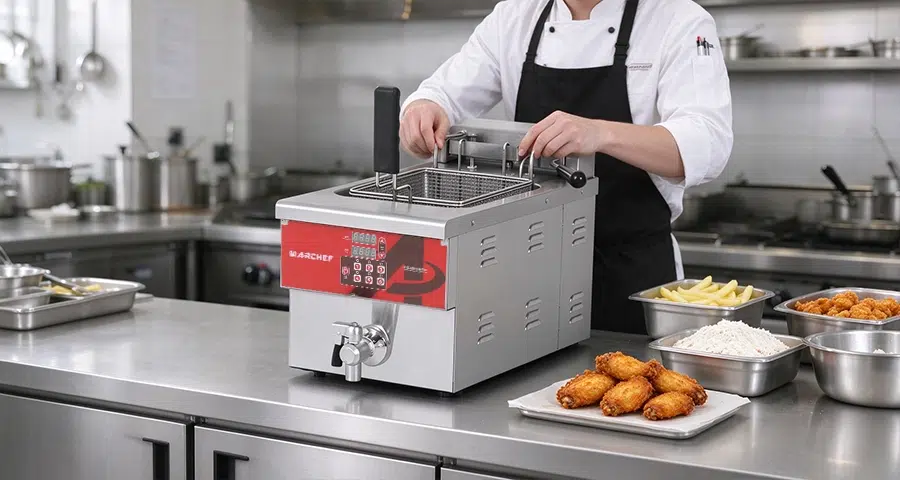
Restaurant operators deal with line cooks who leave baskets in hot oil for too long or pull frozen chicken tenders out too early. When dealers supply standard fryers with simple buzzer timers, the kitchen staff ignores the alarm sound, which results in dry food and angry customers. You need to understand the mechanical design and digital control architecture of automated basket-lift equipment so you can recommend reliable units that protect your dealer margins and solve real kitchen bottlenecks.
Why Do QSR Chains Demand Automated Basket-Lift Systems Today?
Quick-service restaurants face extreme labor shortages, and unexperienced kitchen staff members consistently pull fry baskets at incorrect times, which damages food texture and increases customer food complaints.
QSR chains require auto-lift fryers because mechanical lift systems lift fried food automatically when the cooking cycle ends, eliminating human error, preventing food sogginess, and maintaining standardized crispiness across every single franchise branch.
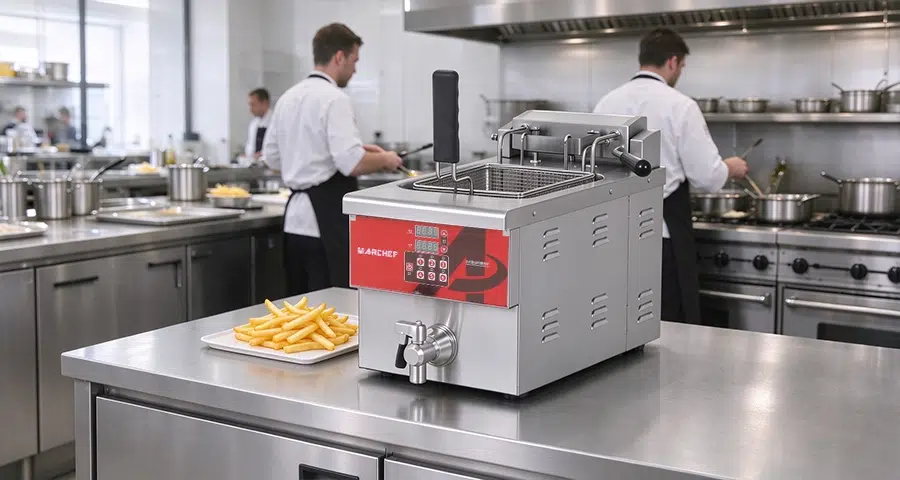
I walked into a busy franchise kitchen during lunch rush, and the acoustic alarm on their standard fryer beeped for three straight minutes while the sole cook was busy assembling burgers. By the time the worker removed the wire baskets, the breaded chicken was black and dry. Auto-lift systems remove this dependency on busy human labor entirely. The motorized lifting arms physically pull the fried protein out of the hot oil reservoir the exact second the program reaches zero. This mechanical intervention stops excess oil absorption, avoids overcooking, and ensures that every franchise location serves identical products even when new kitchen trainees run the frying station.
Tackling Kitchen Turnover and Peak-Hour Errors
High employee turnover means that kitchen operators do not have time to train fry cooks properly. Automated lifters drop the wire baskets down and raise them up automatically without requiring constant worker monitoring during high-stress hours.
Standardizing Food Quality Across Franchise Locations
Franchise headquarters require repeatable food output across all store locations. Mechanical lift controllers store exact multi-stage frying profiles so that French fries, bone-in chicken, and cheese sticks receive the exact same immersion time every day.
The Shift Toward Automated Tender Specifications
Modern fast-food brands build their brand reputation around hand-breaded tenders and chicken filets. These heavy proteins require strict cook profiles to stay juicy inside and crisp outside, which demands automated lift timing.
| Feature Factor | Standard Manual Fryers | Automated Basket-Lift Fryers |
|---|---|---|
| Pull Timing Control | Manual human response to buzzer | Automatic mechanical motorized lift |
| Food Consistency | High batch-to-batch variation | Fully standardized across shifts |
| Staff Dependency | Requires continuous monitoring | Press-and-walk-away workflow |
| Oil Sogginess Risk | High when baskets stay submerged | Zero because food drains immediately |
How Do Dynamic Recovery Algorithms Outperform Static Fryer Timers?
Dropping pounds of frozen food drops oil temperatures fast, meaning static countdown timers consistently undercook thick proteins or serve undercooked food whenever busy kitchens load cold baskets back-to-back.
Dynamic cook compensation algorithms monitor real-time oil temperature recovery rates and stretch the frying timer automatically to guarantee safe food core temperatures, while static timers merely count down fixed seconds regardless of actual oil heat.
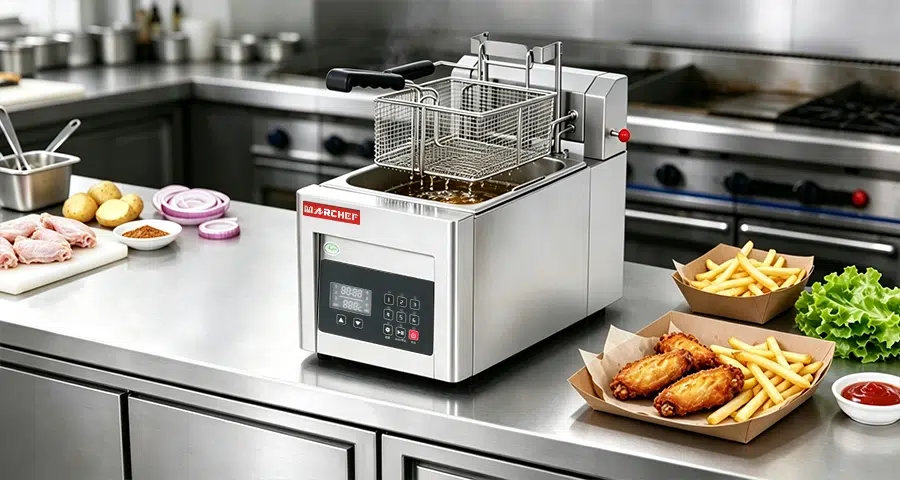
I tested two identical fryers side by side with large baskets of frozen breaded chicken strips. The first machine used a basic digital timer set for four minutes flat. The second machine ran a dynamic algorithm powered by a submerged resistance temperature detector. When we dropped two kilograms of frozen meat into the vat, the oil temperature plunged immediately from one hundred and eighty degrees Celsius down to one hundred and fifty-two degrees Celsius. The basic machine lifted its basket at four minutes, leaving the chicken core raw at fifty-nine degrees Celsius. The intelligent machine detected the steep thermal drop, stretched the frying time by forty-two seconds, and lifted the food at an internal core temperature of seventy-six degrees Celsius.
The Impact of Frozen Drops on Oil Temperature
When frozen product enters hot cooking oil, the temperature drops rapidly. The fryer must pump high thermal energy into the oil to climb back to target heat, which alters the required cooking duration.
How PID and Dynamic Time-Stretch Algorithms Work
Proportional-integral-derivative controllers track the temperature curve second by second. When the controller senses that the oil falls below the setpoint, its software stretches the countdown timer until the total thermal heat input equals the target profile.
Interlock Logic: Enforcing Safe Food Core Temperatures
Smart fryer boards feature safety interlocks that block line cooks from starting a new cycle if the oil temperature sits below the safe minimum threshold, which stops undercooked poultry before it ever reaches a plate.
Dual-Basket Independent Asynchronous Controls
Split-vat fryers use dual independent controllers to run separate timers on adjacent baskets. Line cooks can drop fries in the left basket and breaded tenders in the right basket without flavor cross-contact or timer confusion.
| Parameter | Static Countdown Timers | Dynamic Time-Stretch PID Systems |
|---|---|---|
| Sensor Feedback | Basic on/off thermostat switch | High-precision submerged platinum RTD |
| Frozen Load Response | Runs fixed time; food undercooks | Stretches time dynamically to finish cook |
| Food Safety Risk | High during back-to-back rushes | Minimal because heat volume drives time |
| Temperature Drift | Suffers from thermal lag swings | Tight temperature band within one degree |
Which Mechanical Hardware Designs Prevent Premature Warranty Failures?
Cheap basket lift mechanisms break down under hot grease environments, causing bent lift arms, burnt lift motors, and expensive warranty repairs that wipe out equipment distributor profits.
Heavy-duty motorized linear actuators with dual-supported box-channel gantries outlast electromagnetic solenoids because they lift heavy loads smoothly without jarring stops, resisting heat, grease vapor, and physical deflection over years of kitchen use.
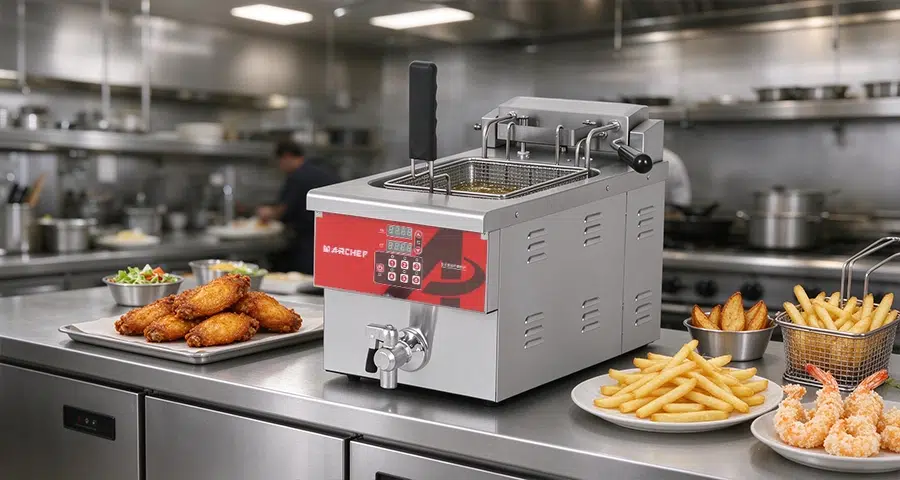
I examined a batch of broken fryers returned to a local repair workshop after six months of high-volume kitchen service. Every single unit used cheap electromagnetic solenoid lift pins mounted to thin single-point sheet metal arms. The sudden violent snap of the solenoid lift action bent the basket rods out of alignment. Furthermore, hot oil vapors entered the unsealed motor housings, which coated the electrical switches in sticky grease varnish and burned the coils out. Equipment dealers must inspect the internal mechanical lift assembly thoroughly before signing distribution contracts. High-grade machines use enclosed linear actuators with steel drive gears, optical position sensors, and stiff structural gantries that handle heavy baskets without twisting.
Linear Actuators vs. Solenoid Lifts
Electromagnetic solenoids fire with violent shock impulses that splash hot oil and bend lift rods. Motorized linear actuators provide smooth, continuous upward and downward motion that protects mechanical linkages and stops grease splashing.
Grease-Mist Shielding and IP Ratings for Electronics
Cooking oil vapor penetrates standard enclosures and ruins electronic logic boards. Fryers built with minimum IPX4 or IPX5 ratings and sealed silicone gaskets block airborne grease from shorting out sensitive computer circuits.
Basket Arm Rigidity and Heavy-Load Deflection
Single-sheet metal arms bend downward when cooks load them with five kilograms of frozen chicken. Dual-supported box-channel lifting gantries distribute torsional loads evenly, preventing vat rim deformation and motor gear binding.
Modular Components for Rapid Field Servicing
Field service technicians need quick access to drive modules. Fryers designed with modular slide-out actuator trays and quick-disconnect wire harnesses cut on-site repair times from three hours down to thirty minutes.
| Hardware Component | Cheap Entry-Level Designs | High-End Commercial Build Standards |
|---|---|---|
| Drive Mechanism | Electromagnetic snap solenoids | Motorized industrial linear actuators |
| Vapor Protection | Open vents; bare logic boards | IPX5 sealed enclosures with gaskets |
| Arm Construction | Single-point stamped sheet metal | Welded dual box-channel steel gantries |
| End-Stop Sensing | Mechanical microswitches (stick easily) | Optical sensors or Hall effect switches |
How Does Thermal Heat Recovery Compare Between Electric and Gas Auto-Lift Fryers?
Slow heat recovery rates create greasy, soggy food, forcing dealers to decide whether high-efficiency submerged electric elements or advanced gas burner tubes best serve their commercial restaurant accounts.
Submerged electric heating elements transfer up to eighty-five percent of heat energy directly into cooking oil, delivering faster recovery times during continuous basket-drop cycles than standard atmospheric gas fryers that lose heat through exhaust flues.
I tracked energy data across several busy fast-food operations running back-to-back frying batches during weekend dinner rushes. The atmospheric gas fryers struggled to regain target temperature because hot exhaust gases escaped up the chimney stack before transferring heat through the vat walls. The submerged electric elements sat directly inside the liquid fat, transferring heat without insulation losses. For high-volume kitchens running auto-lift units every three minutes, rapid heat recovery is mandatory. When baskets drop automatically, the oil must return to cooking temperature within sixty seconds. Submerged electric coils accomplish this thermal recovery rapidly, while advanced infrared gas burners require blower-assisted forced draft systems to match that pace.
Heat Recovery Speeds: Gas Burners vs. Electric Elements
Direct immersion electric elements dump heat directly into the frying medium, achieving rapid temperature recovery between consecutive drops. Atmospheric gas fryers require longer dwell times unless equipped with modern internal heat exchange tubes.
Protecting Oil Life and Built-In Filtration Synergy
Automated fryers run hot all day, which breaks down frying oil through oxidation and carbonization. Pairing auto-lift systems with built-in motorized multi-stage filtration pumps removes burned sediment, doubling oil service life and reducing restaurant operational costs.
Global Certifications and Voltage Compatibility
Equipment distributors must verify electrical compliance before importing foreign equipment. Commercial fryers must hold CE, ETL, or UL sanitation marks and accommodate standard three-phase electrical supplies like 380V or 400V for commercial infrastructure.
| Thermal Characteristic | Submerged Electric Systems | Standard Atmospheric Gas Systems |
|---|---|---|
| Thermal Efficiency | 80% to 85% direct transfer | 50% to 60% (flue heat loss) |
| Temperature Recovery | Very fast; elements sit directly in oil | Slower recovery between cold food drops |
| Infrastructure Needs | High-amperage 3-phase power drops | Gas lines and heat exhaust hoods |
| Cold Zone Size | Optimized space beneath elements | Deep cold zone below internal gas tubes |
How Can Equipment Dealers Build a Winning Sales Playbook for Chain Accounts?
Dealers struggle to convince cost-conscious restaurant owners to spend extra capital on auto-lift machines instead of buying cheap standard fryers that seem adequate on paper.
Dealers can close multi-unit chain accounts by demonstrating how automated lifters cut kitchen labor costs, save thousands of dollars in cooking oil through integrated filtration, and eliminate costly food waste from burned batches.
I often watch equipment sales reps try to sell auto-lift fryers by talking about computer chip specifications and stainless steel grades. Most restaurant owners do not care about circuit boards; they care about kitchen payroll and monthly food costs. When you build a simple return-on-investment spreadsheet for a chain buyer, the sales dynamic changes instantly. Show the chain operator that losing two baskets of overcooked chicken tenders per day wastes thousands of dollars every year. Add in the cost of hiring an extra line cook just to watch the fry station, and the premium cost of automated lift machines pays for itself within six to eight months of real kitchen operation.
Presenting the ROI Model to Restaurant Operators
Dealers should show clear cost comparisons during equipment demonstrations. Calculating saved labor hours, reduced food discard rates, and extended oil life proves that automated machinery generates clear net financial savings.
Selecting Full-Vat vs. Split-Vat Configurations
Help chain buyers match equipment layouts to their menus. Full-vat fryers fit large batches of single items like bone-in chicken, while split-vat fryers let operators fry fish and potato fries side by side without cross-flavor contamination.
OEM/ODM Customization for Franchise Menus
Franchise chains love custom control panels pre-programmed with their specific food menu buttons. Equipment dealers who partner with flexible manufacturers can offer custom-branded control interfaces, specific basket hook angles, and factory-tuned lift profiles.
| Value Driver | Manual Fryer Cost Impact | Auto-Lift System Financial Benefit |
|---|---|---|
| Food Waste Loss | High waste from burned proteins | Zero waste from overcooking errors |
| Labor Utilization | Dedicated worker watching fryers | Multi-tasking staff across lines |
| Cooking Oil Lifespan | Rapid degradation without cycles | Up to 50% longer oil life with filter |
| Equipment Payback | Low initial cost, high running cost | Full machine payback in 6 to 9 months |
Conclusion
Commercial auto-lift fryers eliminate manual kitchen timing errors, protect food consistency, and deliver rapid equipment payback for high-volume restaurant operators through automated controls and durable motorized lifters.