
Are slow ticket times and soggy food killing your kitchen profit during peak rushes? Long customer wait times and poor texture destroy repeat business, yet upgrading cooking gear feels risky and expensive.
A high-speed oven delivers higher long-term ROI for kitchens selling hot, crispy items by cutting cook times by up to eighty percent, while a commercial microwave offers faster short-term payback for simple reheating tasks with minimal upfront capital and lower utility costs.
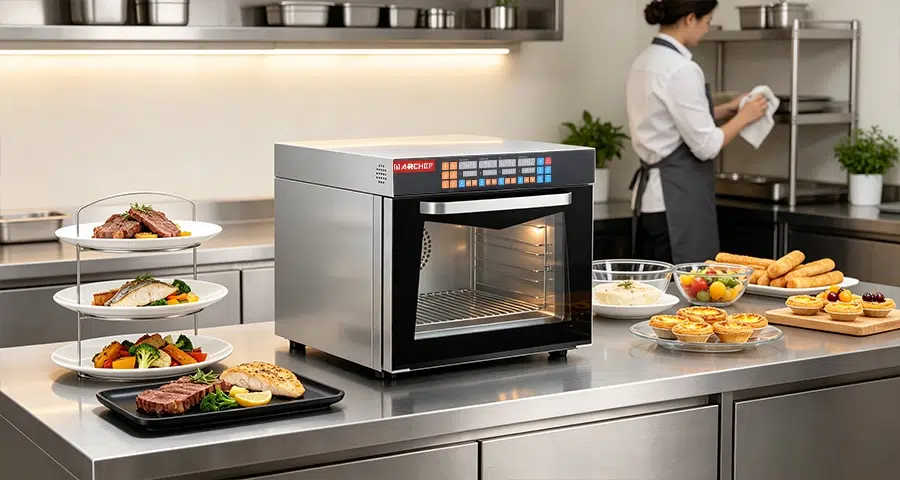
I see restaurant owners waste thousands on the wrong appliances every month. Let us compare the real numbers, heating mechanics, and daily operating costs so you can protect your cash flow.
How Does Pure Microwave Tech Compare to Accelerated Tri-Heat Cooking?
Food comes out rubbery when steam gets trapped around it during busy service hours. Customers immediately notice limp sandwich crusts and uneven cold spots, which hurts your food quality ratings and drives down sales.
Pure microwaves heat food by agitating polar water and fat molecules via electromagnetic radiation, while high-speed accelerated ovens combine microwave energy with high-velocity air impingement and radiant heat to cook the interior while rapidly browning and crisping the exterior surface.
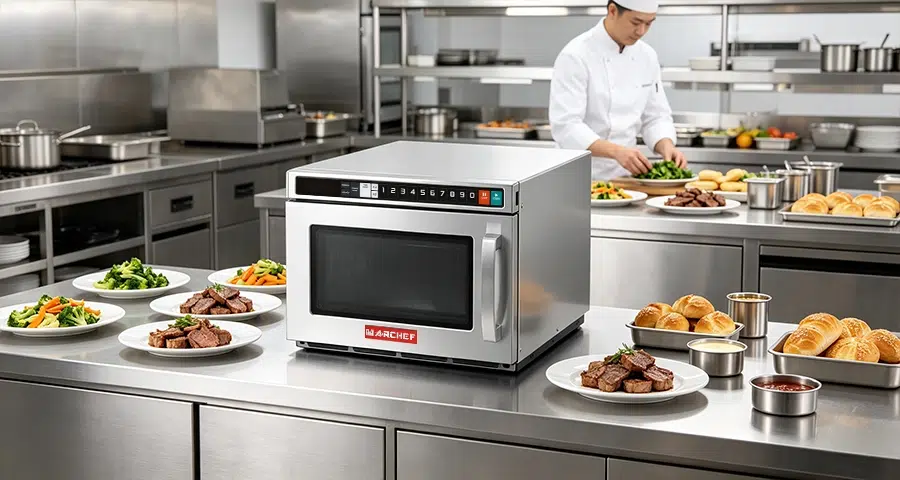
Physics of Surface Browning and Core Heating
The mechanical difference between these two machines comes down to airflow and moisture control. A standard commercial microwave activates internal water molecules. This process heats food fast, but it forces moisture out to the food surface. Because there is no hot moving air to strip that water away, your bread turns soggy.
A high-speed oven solves this problem by using focused air jets called impingement. These hot air jets blast away the cold halo of air around cold food. At the exact same time, radiant infrared heating elements sear the top layer, while internal microwave power finishes the core.
| Feature | Standard Commercial Microwave | High-Speed Accelerated Oven |
|---|---|---|
| Heat Transfer Type | Pure electromagnetic radiation | Tri-heat: microwave, impingement, radiant |
| Surface Reaction | Traps steam, leaves surface soft | Creates Maillard browning and crisping |
| Temperature Range | Fixed cavity temperature | Adjustable cavity up to 280°C |
| Ideal Food State | Soups, sauces, moist portions | Sandwiches, pastries, raw proteins |
I tested this exact difference in our factory test kitchen on artisan panini sandwiches. The microwave made the bread collapse into a wet sponge within two minutes. The high-speed oven delivered toasted crust lines and fully melted cheese in just fifty seconds.
Can Menu Expansion Truly Generate Higher Revenue Beyond Reheating?
Are low ticket averages limiting your daily sales numbers? If your kitchen only warms pre-cooked dishes, customers will view your shop as a cheap snack bar and refuse to spend premium dollars.
High-speed ovens expand menus by baking raw dough, crisping flatbreads, and toasting sandwiches to order in under a minute, which allows operators to charge higher prices per meal and increase average ticket sizes compared to basic reheating.
Ticket Values and Product Presentation
Food margins rely on customer perception. A cold grab-and-go sandwich sells for an average price. Take that exact same sandwich, toast it with melt patterns, and hand it over hot. You can instantly raise the price tag by two to four dollars.
Commercial microwaves cannot do this job. They remain locked into back-of-house utility tasks like melting butter, warming bulk soups, or thawing frozen bases. A high-speed oven moves your business into hot prepared food without requiring heavy griddles or deep fryers.
| Menu Item | Microwave Result | High-Speed Oven Result | Added Margin Opportunity |
|---|---|---|---|
| Breakfast Sandwich | Soft bread, spongy egg | Crispy bun, melted cheese, firm egg | High |
| Personal Pizza | Chewy crust, wet cheese | Blistered crust, bubbly cheese | High |
| Chicken Wings | Pale skin, greasy bite | Browned skin, crisp bite | Very High |
| Bulk Soups | Fast, even liquid warming | Uneven top crusting on liquid | Low |
I remember working with a local bakery owner who was struggling to make lunch sales profitable. We replaced her back counter microwave with an accelerated cooking oven. She launched a toasted sourdough lunch line the following Monday. Her daily lunch transaction values increased by forty percent in three weeks.
What Are the Real Capex, Opex, and Payback Timelines for Each Machine?
Equipment price tags often cause sticker shock for small business operators. Buying cheap equipment feels safe today, but excessive electrical bills and short lifespans can quietly drain your business bank account over time.
Commercial microwaves require low capital expenditure between 500 and 2,000 dollars on standard plugs, while high-speed ovens cost 6,000 to 14,000 dollars with higher electrical draws, but speed ovens pay back faster through higher daily transaction volume.
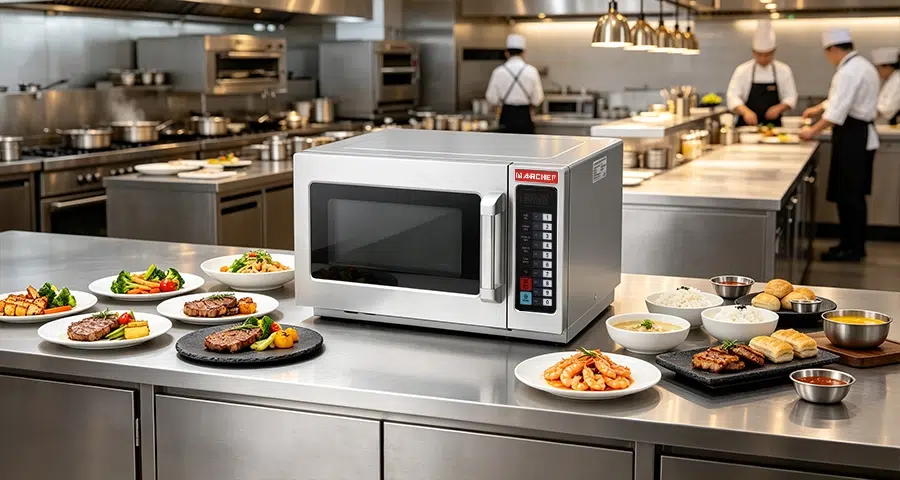
Total Cost of Ownership and Breakeven Mechanics
You must evaluate acquisition cost against ongoing power and structural costs. Most commercial microwaves run on simple 120-volt circuits and pull under 2,000 watts. You can unbox them and plug them into standard outlets.
High-speed units pull between 3,000 and 6,000 watts and usually need 208-volt or 240-volt dedicated lines. However, high-speed ovens feature built-in catalytic converters. These internal converters burn off grease and smoke odors inside the chamber. Because of this feature, you do not need an expensive Type 1 commercial exhaust hood above the oven. Avoiding hood construction saves you thousands of dollars in mechanical contracts and permits.
| Financial Metric | Commercial Microwave | High-Speed Speed Oven |
|---|---|---|
| Average Capex | $500 – $2,200 | $6,000 – $14,000 |
| Electrical Needs | 120V / 15A – 20A | 208V–240V / 30A dedicated |
| Ventless Operation | Standard, no hood needed | Certified UL ventless via catalyst |
| Monthly Power Cost | Low ($20 – $40) | Moderate ($70 – $130) |
| Average Payback Period | 1 to 3 months | 6 to 12 months |
If your shop serves one hundred sandwiches a day, a speed oven amortizes its purchase cost in several months through speed alone. If you only serve ten hot items a day, that high purchase price will hurt your working capital.
How Do These Machines Impact Labor Efficiency and Kitchen Consistency?
Line cooks quit often, and training new staff takes valuable time out of your week. When kitchen staff make inconsistent food, customers complain, tickets get remade, and order bottlenecks slow down your entire team.
High-speed ovens improve kitchen consistency through programmable one-touch controls that lock in multi-stage cooking cycles, eliminating manual guesswork and letting untrained staff produce identical hot dishes during busy shifts.
Labor Training and Station Throughput
Human error ruins food profit faster than high ingredient prices. Standard microwaves rely on a simple dial or basic countdown timer. The cook must guess how long an item needs based on starting temperature. If a line worker leaves a sandwich in too long, the item turns hard and ends up in the trash bin.
High-speed ovens eliminate this error through pre-programmed recipes. You load recipes via USB or cloud interfaces. The worker places the food inside, taps one icon on a color screen, and walks away. The oven controls the blower motor speed, the microwave wattage, and the top radiant heat in distinct stages.
| Operational Factor | Commercial Microwave | High-Speed Accelerated Oven |
|---|---|---|
| Programming Capacity | Basic 10 to 20 memory pads | 100+ multi-stage recipe presets |
| Staff Skill Requirement | Medium: staff must judge doneness | Low: simple one-touch icon operation |
| Cleanability Routine | Simple daily cavity wipe-down | Daily chemical spray and catalyst burn-off |
| Maintenance Complexity | Low: basic magnetron parts | High: blowers, filters, door seals |
One kitchen I assisted had a staff turnover rate above fifty percent. New cooks kept serving cold centers in breakfast sandwiches using an older microwave. We shifted their core items to one-touch speed ovens. Order errors dropped to zero overnight, and service times dropped from four minutes to sixty seconds per ticket.
Which Asset Matches Your Specific Foodservice Operating Model?
Buying equipment without evaluating your floor plan and order queue leads to severe bottlenecks. A single slow cooking station can hold back your entire service line, making your dining room look disorganized and chaotic.
High-volume cafes, quick-service spots, and ventless bars gain the highest return from high-speed ovens, whereas convenience counters, prep stations, and low-volume kitchens achieve superior capital utilization with commercial microwaves.
Matching Equipment Assets to Production Bottlenecks
You should look at your peak-hour rush to make this equipment decision. A high-speed oven has one single cooking chamber. If you put a chicken breast in for three minutes, no other order can enter that oven until it finishes. If your business model depends on heating large batches of soup while toasting sandwiches at the same time, a single speed oven will create a line out your door.
The smartest layouts split these tasks across two pieces of gear. Operators use low-cost commercial microwaves in the back line to heat liquids and hold hot bulk ingredients. Then, they place a high-speed oven at the front pickup counter for final searing, melting, and crisping.
| Business Model | Recommended Asset Choice | Primary Strategic Benefit |
|---|---|---|
| Coffee Shop / Cafe | High-Speed Oven | High-speed artisan toasting without hoods |
| Fast Casual / QSR | Both in Parallel (Paired) | Microwave for prep, speed oven for assembly |
| Convenience Store | Commercial Microwave | Low upfront cost, simple self-serve durability |
| Hotel Bar / Kiosk | High-Speed Oven | Fresh hot snacks in spaces without exhaust ducts |
| Catering Prep Kitchen | Heavy-Duty Microwave | Fast bulk rethermalizing in hotel pans |
I always advise food business operators to audit their top five sellers first. If four out of five dishes require a dry, crisp bite, you need an accelerated oven. If your dishes rely on sauces, broths, and moist gravies, save your cash and buy a durable commercial microwave.
Conclusion
Choose a commercial microwave for simple back-of-house reheating tasks, but invest in a high-speed oven to expand your hot food menu, cut ticket times, and capture higher profit margins.