
Are your kitchen fridges breaking down just when the summer heat hits its peak? If a sudden cooling failure leaves you sweating over spoiled inventory, you are not alone.
You can fix most summer commercial refrigerator failures by cleaning clogged condenser coils, replacing degraded door gaskets, and clearing blocked air vents. If the compressor runs constantly without cooling, you must check for voltage drops or refrigerant leaks before calling for professional technician service.

I have run kitchen equipment factories in China for years, and every summer, my inbox fills with urgent messages from European and Middle Eastern distributors. Heat waves always expose the hidden weaknesses in your kitchen refrigeration setup. Let us walk through the exact steps you need to take right now to keep your cooling systems running perfectly when the kitchen temperature rises.
Why Summer Heat Waves Are the Ultimate Stress Test for Kitchen Refrigeration?
Are your kitchen refrigerators working twice as hard because the ambient room temperature is simply too high? When summer hits, high kitchen temperatures force your cooling systems to run constantly, which triggers sudden mechanical breakdowns.
Summer heat waves act as a stress test because high ambient temperatures overload the cooling cycle. If the room is too hot, the condenser cannot release heat efficiently, which causes the compressor to run continuously, overheat, and eventually suffer complete electrical or mechanical failure.
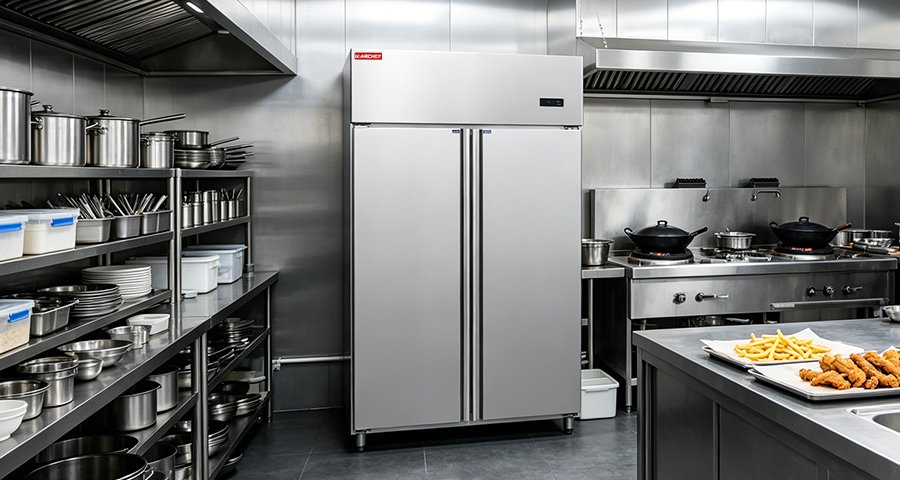
When the summer rush begins, kitchen temperatures spike quickly. I always tell our partners that positioning refrigeration units next to deep fryers, griddles, or ovens is a recipe for disaster. This bad placement adds a massive thermal load to your fridge. The compressor must work non-stop to fight the external heat. If your staff overloads the interior shelves with food, you block the internal airflow completely. The air cannot circulate, and the compressor runs until it burns out.
| Negative Factor | Immediate Impact on System | Long-term Result |
|---|---|---|
| Near Ovens/Fryers | High ambient thermal load | Compressor burns out early |
| Overloaded Shelves | Restricted internal airflow | Evaporator coil freezes up |
| Poor Room Ventilation | Heat builds up around unit | Energy consumption spikes |
We also see major issues with door seals during hot months. Warm, humid kitchen air enters the cabinet through tiny gaps in degraded gaskets. This moist air causes rapid condensation and creates thick ice on the evaporator coils. Once the coils freeze, the fridge stops cooling entirely. You can spot these issues early if your team keeps a daily manual temperature log. If you see the numbers creeping up over three days, your compressor is already struggling.
What Is the Ultimate Summer Preventative Maintenance Checklist for Restaurant Chains?
Can you prevent expensive emergency repair bills during the busiest season of the year with a simple schedule? You can stop over 80% of summer refrigeration breakdowns by following a strict weekly and monthly preventative maintenance checklist.
The ultimate summer preventative maintenance checklist must include weekly condenser coil cleaning, daily door gasket inspections, and strict monthly checks on voltage stability. You must also ensure a minimum clearance of 10 centimeters around all refrigeration units to allow proper airflow and heat dissipation.

I looked at our factory service records last year and found a clear pattern. Most summer service calls happen because simple maintenance steps are ignored. For example, high-wear components like light bulbs, fuses, door seals, handles, and hinges need regular checks. You must know that standard manufacturer warranties do not cover these wearable parts. If a door handle breaks or a seal degrades, you must pay for it yourself.
Critical Maintenance Zones
Airflow and Spacing Rules
You must never push your refrigerators flat against the wall to save space. Always leave a clear gap around the top, back, and sides of the machine. If you block the ventilation grates, the hot air cannot escape, and the unit will choke on its own heat.
Daily Monitoring Habits
I highly recommend using IoT-enabled refrigeration sensors today. These smart sensors automatically monitor voltage fluctuations and temperature anomalies in real time. They text you an alert before a total system failure happens, which saves your expensive food stock.
Why Is Cleaning Condenser Coils the #1 Task Your Kitchen Staff Must Do Weekly?
Did you know that a thin layer of dust on your refrigerator coils can double your monthly electricity bill? Thick grease and dust on condenser coils block heat transfer, which forces the system to work harder and fail early.
Cleaning condenser coils weekly is the top maintenance task because dirty coils cannot release heat from the refrigerant gas. This restriction raises internal system pressure, increases energy consumption by up to 30%, and causes the compressor to overheat and shut down permanently.
In a busy commercial kitchen, grease vapors mix with airborne dust constantly. This mixture creates a thick, sticky blanket over the condenser coils in just a few weeks. To clean them safely, your staff must use OEM-approved degreasers and specialized sanitizers. Never use harsh chemicals or sharp tools, because you will puncture the delicate aluminum fins and cause a costly refrigerant leak.
Safe Coil Cleaning Protocol
Step 1: Disconnect the Power
Always unplug the refrigerator from the wall socket before you remove the protective external grate. This step prevents electrical shocks and keeps your staff safe during cleaning.
Step 2: Debris Removal
Use a vacuum cleaner with a brush attachment to remove loose dust. Then, use a specialized condenser coil brush to clean the fins. You must use vertical brush strokes only. If you brush horizontally, you will bend the fragile metal fins and block the airflow permanently.
Step 3: Degreasing the Surface
Spray the OEM-approved degreaser gently onto the coil surface. Let it sit for five minutes to break down the kitchen grease, then wipe it away with a soft cloth. Put the protective grate back on only after the area is completely dry.
For Distributors: How Can You Reduce Warranty Calls Through Client Education?
Are you losing your business profits because your buyers keep calling you for repairs that are not manufacturing defects? You can cut your incoming warranty calls by teaching your customers that poor maintenance voids their coverage.
Distributors can reduce warranty calls by providing clear visual maintenance guides and onboarding checklists to buyers. You must explain clearly that commercial refrigeration warranties explicitly exclude mechanical failures caused by a lack of routine cleaning or improper installation.
As a manufacturer supplying global distributors, I see this issue every summer. A distributor gets an angry call from a restaurant owner because a three-month-old freezer stopped working. The distributor sends a technician, only to find the condenser coil completely caked in thick grease. The factory warranty does not cover this failure because it is a maintenance issue, not a factory defect. This situation creates tension between you and your customer.
| Warranty Covered Items | Excluded Items (User Responsibility) |
|---|---|
| Factory Compressor Defects | Failures from Dirty Condenser Coils |
| Internal Wiring Faults | Torn Door Gaskets and Broken Handles |
| Thermostat Malfunctions | Blown Fuses and Broken Light Bulbs |
To fix this problem, you should train your sales team to educate buyers during the delivery process. Give every customer a simple, single-page guide that shows how to clean the unit. Explain clearly that if they do not clean the coils, the warranty becomes void. If you educate your clients well, your service callback rate will drop significantly. Our top global distributors maintain a low service callback rate of just 2% to 2.5% because they train their clients properly.
What Are the Top 5 Commercial Refrigerator Troubleshooting Steps Before Calling a Technician?
Do you want to save money and avoid waiting days for a busy repair technician to arrive during the summer rush? You can diagnose and fix most common cooling problems yourself by following five basic troubleshooting steps.
The top 5 troubleshooting steps are: check the main power source, inspect the door gaskets for air leaks, clean the condenser coils completely, clear any blocked internal air vents, and check the evaporator coils for thick ice build-up.
Before you spend money on an emergency technician visit, take ten minutes to run through these diagnostic steps. Many kitchen issues are simple fixes that do not require any technical tools or deep mechanical knowledge.
Step-by-Step Diagnostic Guide
1. Check Power and Voltage
Ensure the power cord is plugged firmly into the outlet. Look at your main electrical breaker panel to see if a fuse has blown. High summer power demands on the local grid often cause sudden voltage drops that trip your breakers.
2. Inspect the Door Seals
Close the refrigerator door on a thin piece of paper. Pull the paper out gently. If it slides out easily without any resistance, your gasket is worn out. Warm air is leaking inside, which causes excessive condensation and stops the cooling cycle.
3. Clear Airflow Obstructions
Look inside the cooling cabinet. Move any large food boxes away from the internal fans and vents. Your refrigerator needs steady internal airflow to distribute cold air evenly across the shelves.
4. Examine the Evaporator Coils
Look at the cooling coils inside the unit. If you see a thick layer of white frost or ice, turn off the refrigerator and let it defrost manually. Ice blocks the cold air from entering the cabinet.
5. Verify Ambient Temperatures
Make sure the ambient room temperature around the fridge is below 32 degrees Celsius. If the room is too hot, or if the unit is trapped in a tight corner without airflow, move the machine to a cooler location.
Conclusion
You can prevent and fix most summer refrigeration failures by cleaning coils weekly, checking door seals, and ensuring proper airflow around the unit.