
Are your buffet drink stations breaking down quickly? Replacing cloudy and cracked equipment wastes money. You can solve this problem now by choosing the correct combination of materials.
The best beverage dispenser uses a hybrid design. A polished stainless steel base provides durability and rust resistance. A clear polycarbonate bowl lets staff monitor fill levels easily. It also displays colorful drinks beautifully without requiring guests to lift heavy metal lids.
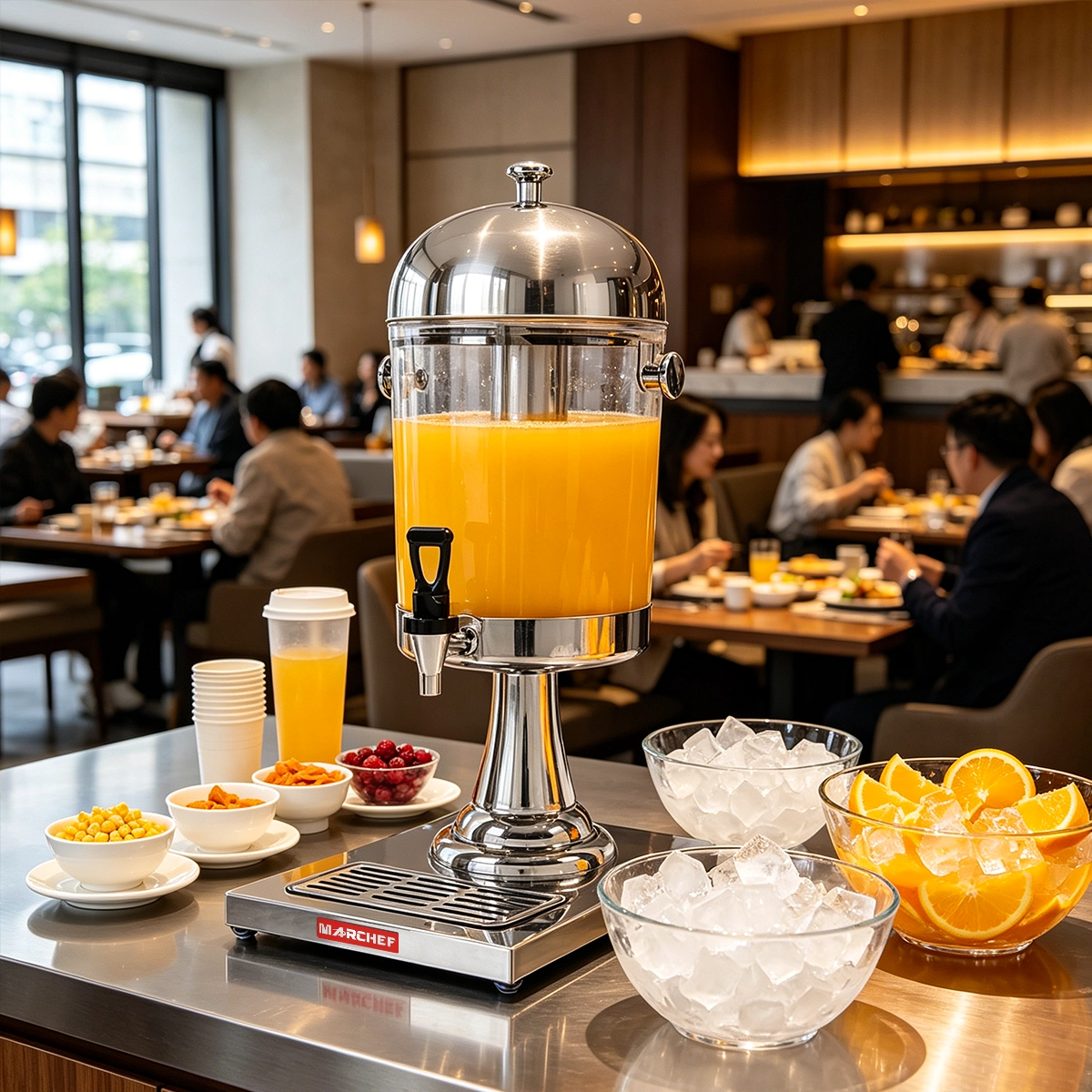
You might think any plastic or metal container works well for catering events. I learned the hard truth about equipment materials after years of testing. Let us look at how these two materials perform in real dining rooms so you can make the smartest choice.
How Do You Reduce Labor Costs in Commercial Kitchens with Easy Cleaning?
Dirty drink stations ruin your premium image. Hard-to-clean parts steal time from your busy staff. Choosing non-porous materials cuts your daily washing time in half.
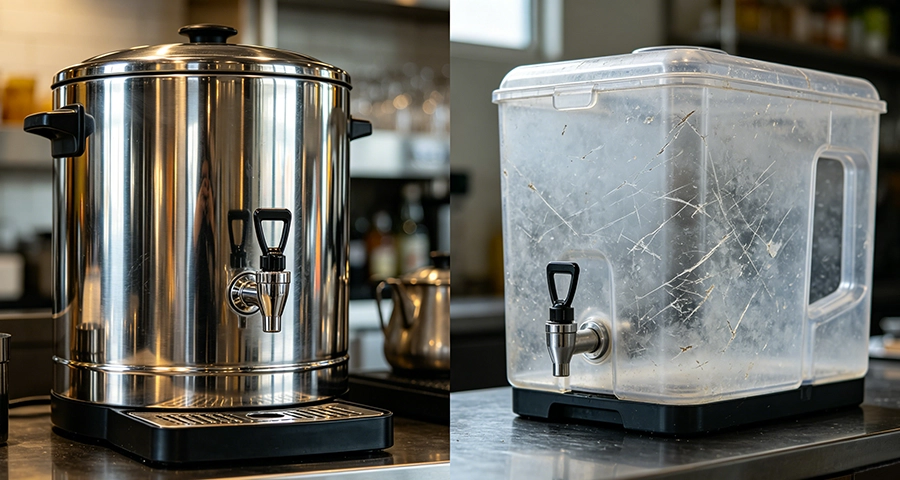
Smooth stainless steel resists chemical cleaners and stops bacteria. It cleans quickly and lowers labor costs. Polycarbonate requires mild soap and soft cloths. Rough sponges cause tiny scratches that trap dirt and make the clear plastic look cloudy over time.
Understanding Surface Maintenance
I talk about equipment maintenance with buyers often. Speed is everything in a busy restaurant. Stainless steel parts support fast cleaning. The metal surface lacks tiny pores. Food particles and bacteria have nowhere to hide on the metal. Your staff can wash and sanitize metal parts very quickly. They can move on to other tasks faster.
Polycarbonate needs careful handling. It resists impacts well. But its surface is softer than metal. If your staff uses rough sponges, they will scratch the clear walls. These tiny scratches hold dirt over time. This makes the bowl look dirty, even when it is fully clean. You must train your staff to wash plastic parts gently with specific soft tools. This gentle washing prevents damage. It extends the life of the bowl.
Stainless steel ice cores also improve efficiency. They cool drinks very fast. They do not dilute the juice with melting water. They wipe clean in seconds.
| Material | Cleaning Speed | Scratch Resistance | Bacteria Resistance |
|---|---|---|---|
| Stainless Steel | Fast | High | Very high |
| Polycarbonate | Slow | Low | Moderate |
How Do You Navigate BPA-Free Standards and Material Compliance for Food Safety?
Unsafe plastics release bad chemicals into cold food. This puts guests at risk. You must check safety certificates for all plastic parts before you buy anything.
You must ensure polycarbonate bowls are certified as BPA-free. This stops chemical leaching into cold drinks. Stainless steel is naturally non-toxic. It meets all food safety standards easily without requiring complex chemical testing or special health certificates.
Evaluating Chemical Risks
Food safety dictates every decision in commercial catering. Custom agents check safety documents strictly at every border. Missing certificates cause long delivery delays. You cannot use unverified plastics in food service.
Standard polycarbonate can contain BPA. This chemical can move into liquids. It harms human health. This leaching happens especially fast in acidic drinks like orange juice. You must demand BPA-free certification from your supplier before you order. Clear plastic is great for checking juice levels. But human safety always comes first.
Stainless steel removes this worry completely. The metal is inherently safe for food contact. It does not release chemicals into cold or hot liquids. It ensures total compliance with health rules.
Furthermore, outdoor events create another problem for plastics. Direct sunlight hurts clear polycarbonate. UV rays cause the plastic to turn yellow. The plastic becomes brittle over time. Stainless steel ignores UV light entirely. It stays strong outdoors. It saves you replacement costs.
| Safety Metric | Stainless Steel | Polycarbonate |
|---|---|---|
| Chemical Risk | Zero | Low if BPA-free |
| Certification | Accepted | Document required |
| UV Sunlight Damage | None | Yellows and breaks |
How Do You Match Buffet Equipment to Your Brand Image for Visual Appeal?
Boring metal containers hide fresh juices completely. Guests ignore drinks they cannot see. Clear display sections attract more people to your stations and increase drink consumption.
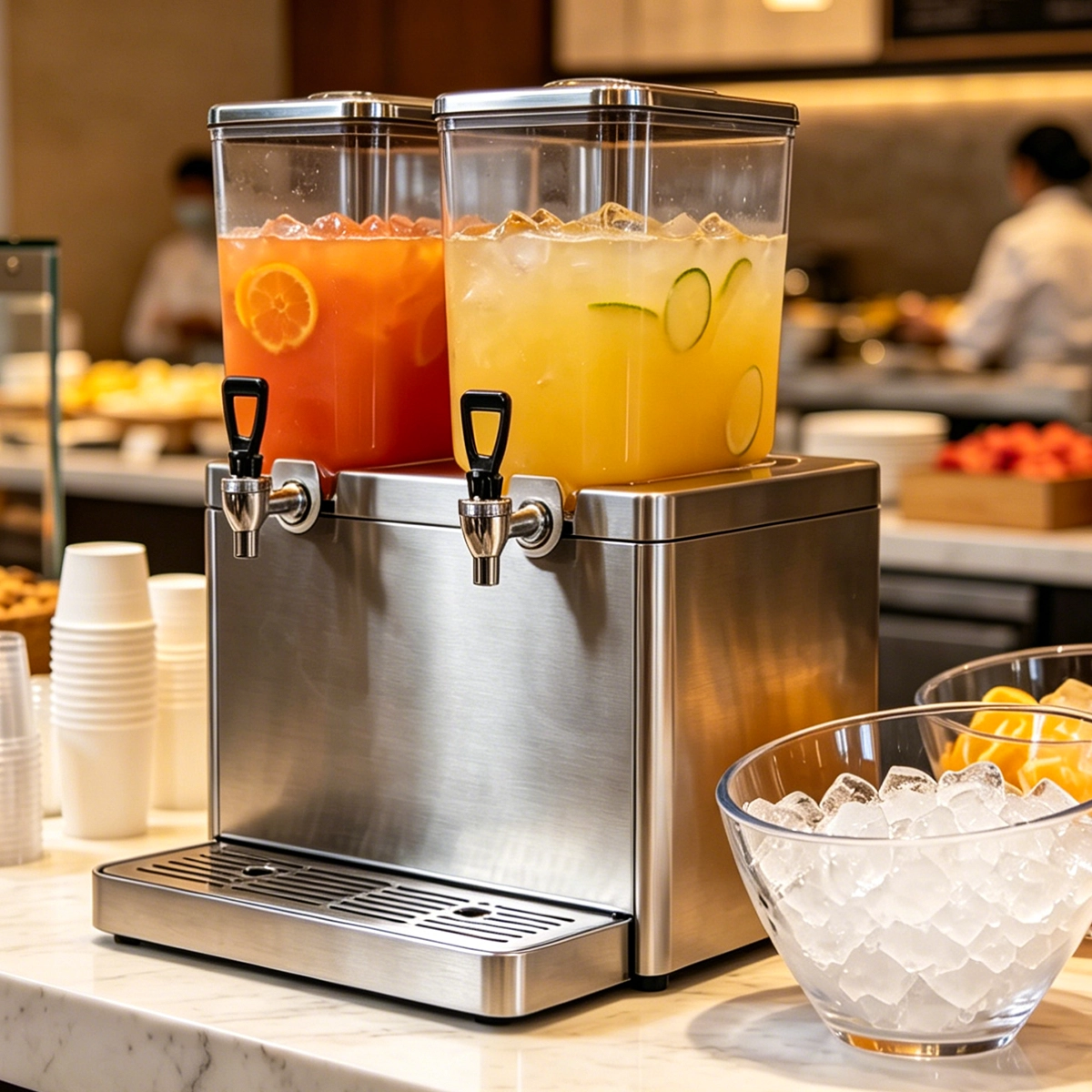
Clear polycarbonate bowls show colorful beverages instantly. Staff can monitor fill levels easily from far away. A polished stainless steel base adds a premium look. Combining both materials gives you an upscale aesthetic and functional visibility at the same time.
Designing the Drink Station
People eat and drink with their eyes first. A solid metal box looks very industrial. It gives a premium feel. But it hides the bright orange juice. It hides the red fruit punch. Guests do not want to lift heavy lids to see what is inside.
Clear polycarbonate solves this visual problem. The transparent walls display the vibrant colors of your drinks. This visual appeal invites guests to pour a glass. It also helps your staff manage the dining floor. They can see when the juice is low from across the room. They can refill it quickly.
There is a scientific benefit to polycarbonate as well. Plastic has a lower thermal conductivity than metal. Heat transfers slowly between the warm room and the cold drink. In a warm dining room, a plastic bowl creates very little condensation. A solid steel container sweats heavily under the same conditions. The water drips onto nice tablecloths. Plastic keeps your display table dry and clean.
| Visual Aspect | Stainless Steel | Polycarbonate |
|---|---|---|
| Drink Visibility | Zero | Complete |
| Condensation | High sweat | Very low sweat |
| Premium Feel | Very high | Moderate |
What Are the Key Considerations for Equipment Distributors Regarding Shipping and Handling?
Heavy metal equipment drives up bulk freight prices. Broken goods during transport destroy profit margins. Lightweight materials solve these complex logistics problems for international buyers.
Polycarbonate is lightweight and resists impacts well. This lowers bulk shipping costs. It makes warehouse handling easier for workers. Solid stainless steel units are heavy and increase transport fees. But metal does offer unmatched structural durability for daily use.
Calculating Freight and Handling
Logistics control your final profit. Buyers calculate every kilogram of shipping weight. Shipping solid stainless steel dispensers by sea costs a lot of money. The heavy weight reduces how many units you can fit in a single shipping container.
Polycarbonate changes this math significantly. The plastic weighs much less than solid metal. This lower weight cuts your bulk freight costs down. It leaves more room for profit. It also helps the people working in the warehouse. They can lift, stack, and move these boxes without physical strain.
Polycarbonate is also very tough against impacts. It handles bumps during transport much better than glass. A dropped box usually survives without broken plastic. A dropped steel unit might get a large dent. That dent ruins its appearance. A dented machine becomes unsellable. A hybrid unit balances the shipping weight and the physical strength perfectly. It provides the best solution for large orders.
| Logistics Factor | Stainless Steel | Polycarbonate |
|---|---|---|
| Unit Weight | Heavy | Lightweight |
| Shipping Cost | High | Lower |
| Impact Response | Dents easily | Resists breaking |
How Do You Choose the Right Fleet for Your Buffet Setup?
Buying all-metal or all-plastic machines leads to daily regrets. You lose visibility or sacrifice durability. A hybrid design fixes both of these major operational flaws.
The most effective strategy combines a stainless steel base and ice core with a BPA-free polycarbonate bowl. This setup provides structural strength and fast cooling. It offers clear product visibility. It keeps shipping weights manageable for your catering business.
Building a Balanced Equipment Strategy
I have watched many buyers struggle with this choice. Some choose cheap, all-plastic units. These crack after a few busy events. They require constant replacement. Others choose expensive, all-metal units. Their guests complain they cannot see the drinks. The heavy units frustrate the staff.
You do not need to choose just one material. You should combine their strengths for maximum efficiency. Use stainless steel for the base, frame, and lid. The metal gives the machine a heavy, stable foundation. It stops the unit from tipping over during a busy service.
Use a stainless steel ice core. Metal transfers the cold temperature into the drink quickly. It cools the juice without adding melting ice water. Use BPA-free polycarbonate for the main holding bowl. The plastic gives you the clear view you need. It keeps condensation low. It keeps the total weight of the machine manageable. You should specify this exact combination.
| Component | Best Material | Primary Benefit |
|---|---|---|
| Base and Frame | Stainless Steel | Stability |
| Main Drink Bowl | Polycarbonate | Clear view |
| Cooling Core | Stainless Steel | Fast cooling |
Conclusion
Always select a hybrid beverage dispenser. A stainless steel base provides strength. A BPA-free polycarbonate bowl offers clear visibility. This combination ensures optimal performance in any commercial buffet.